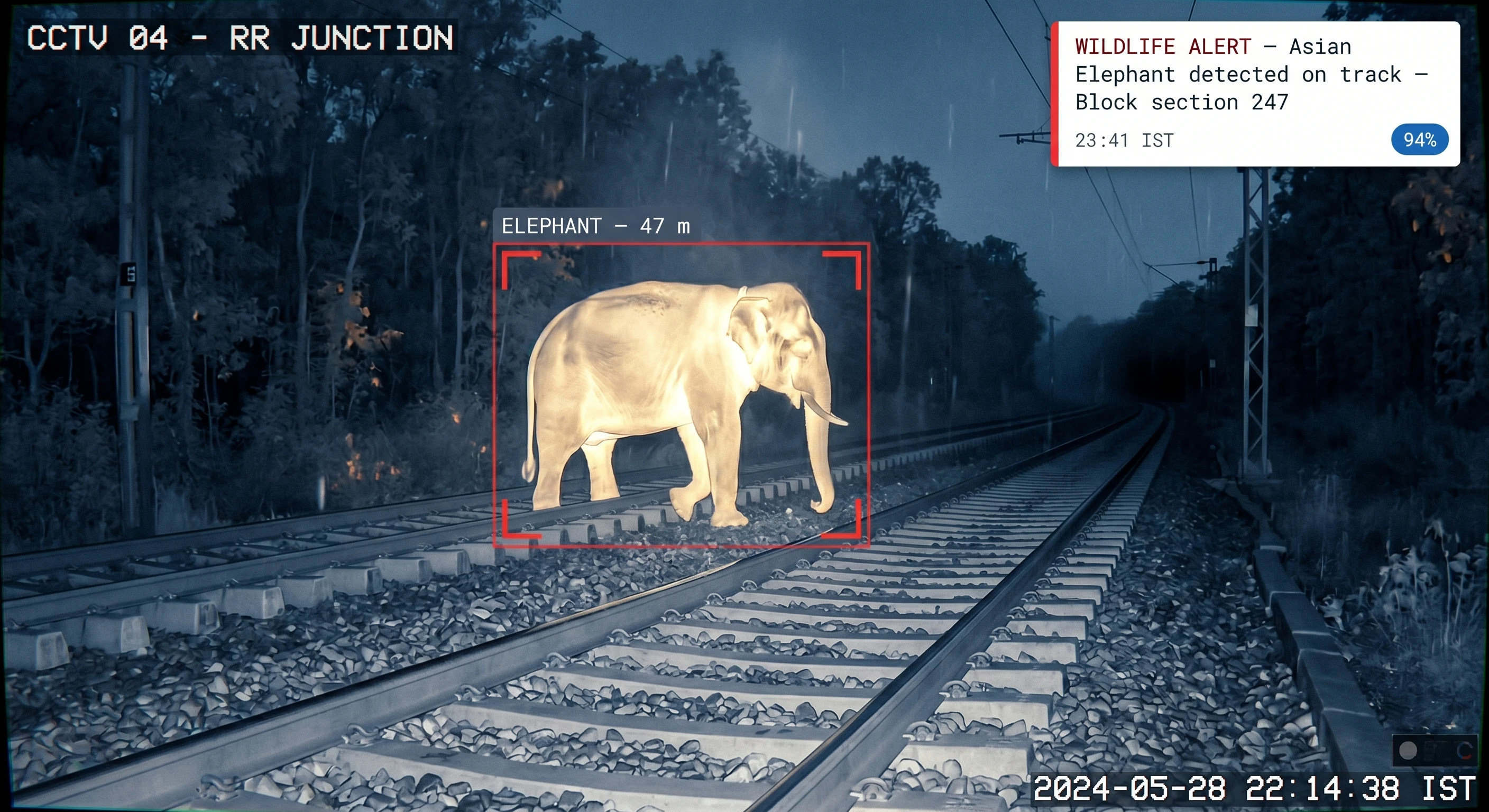
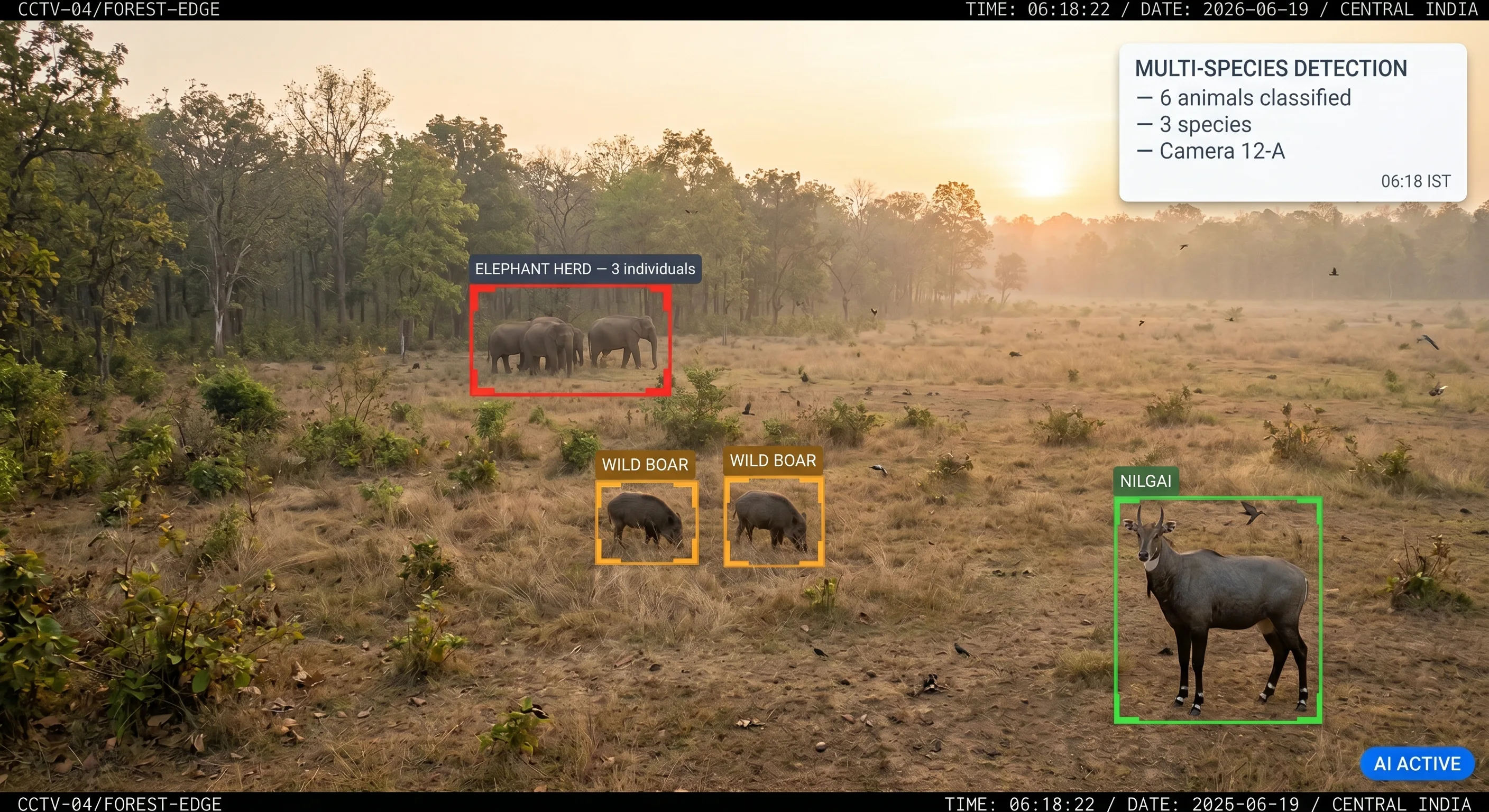
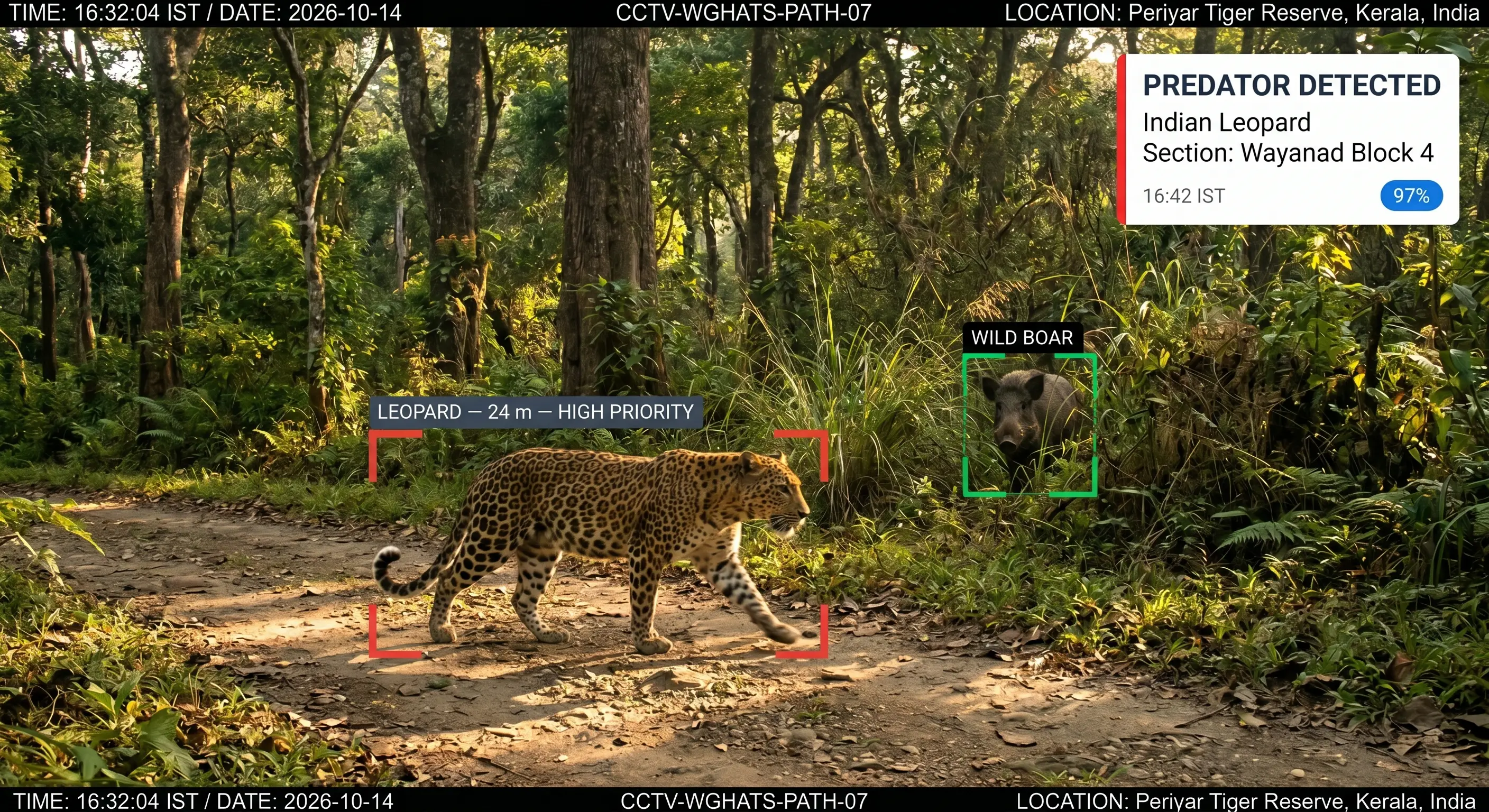
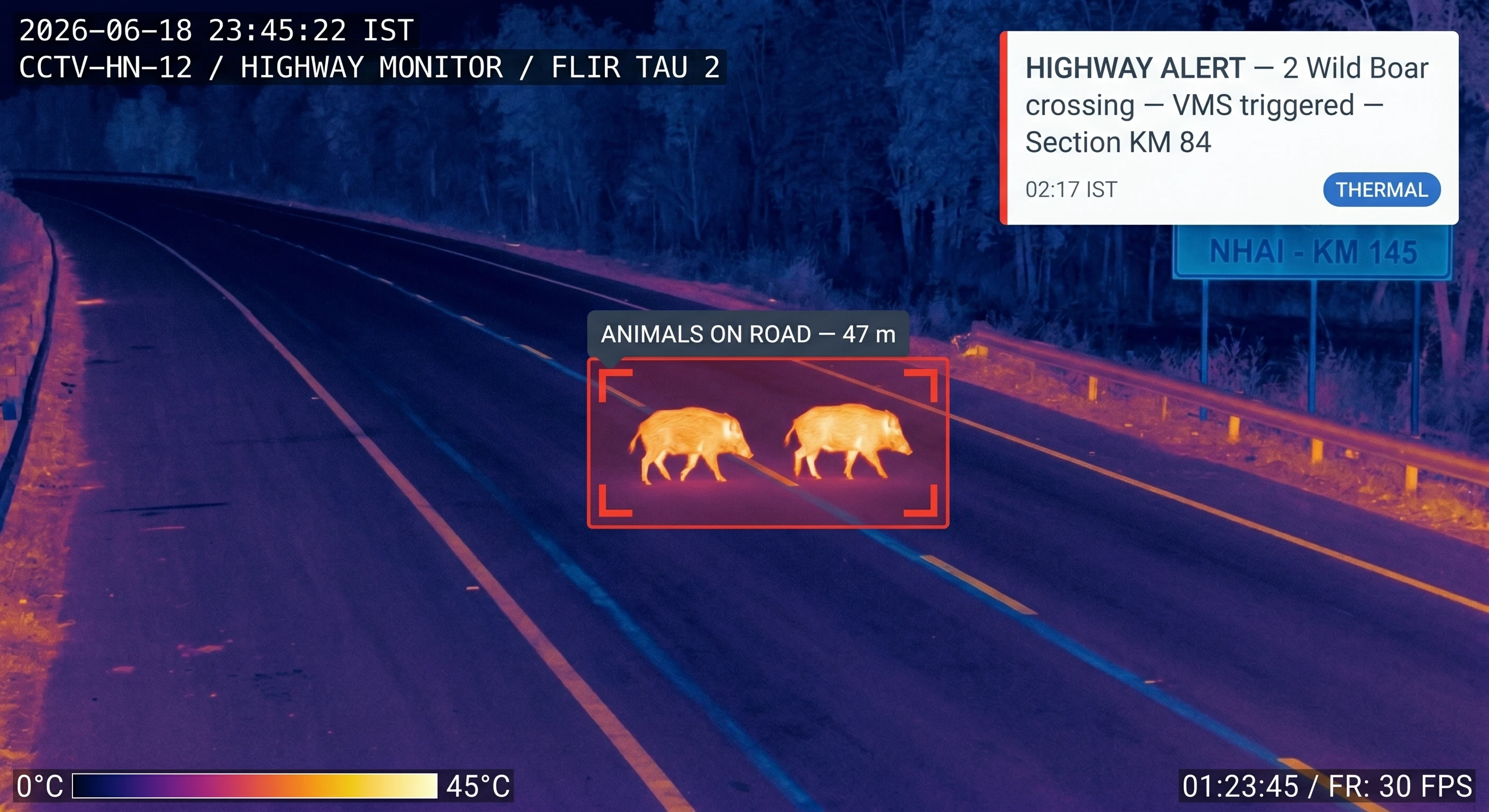
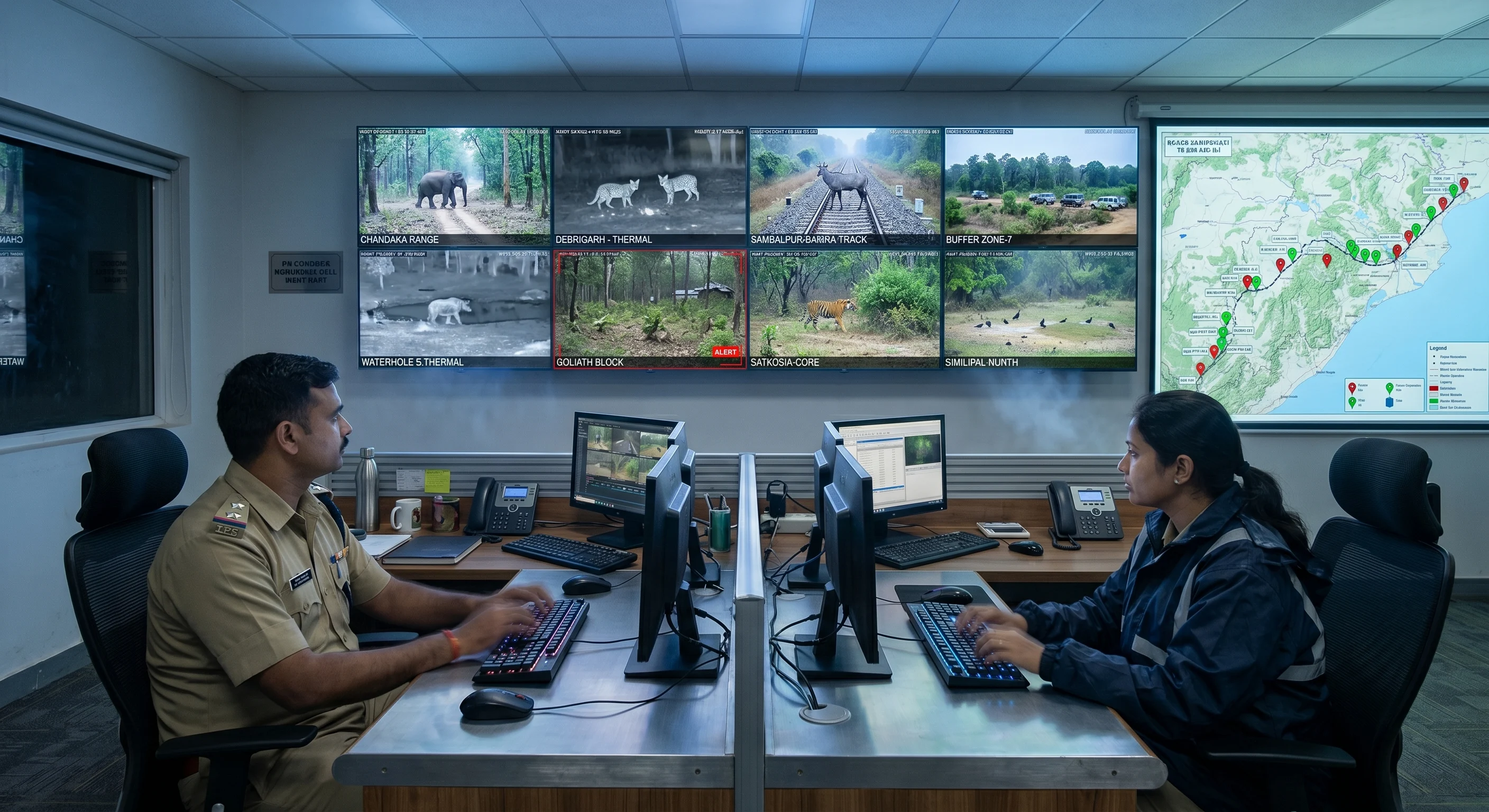
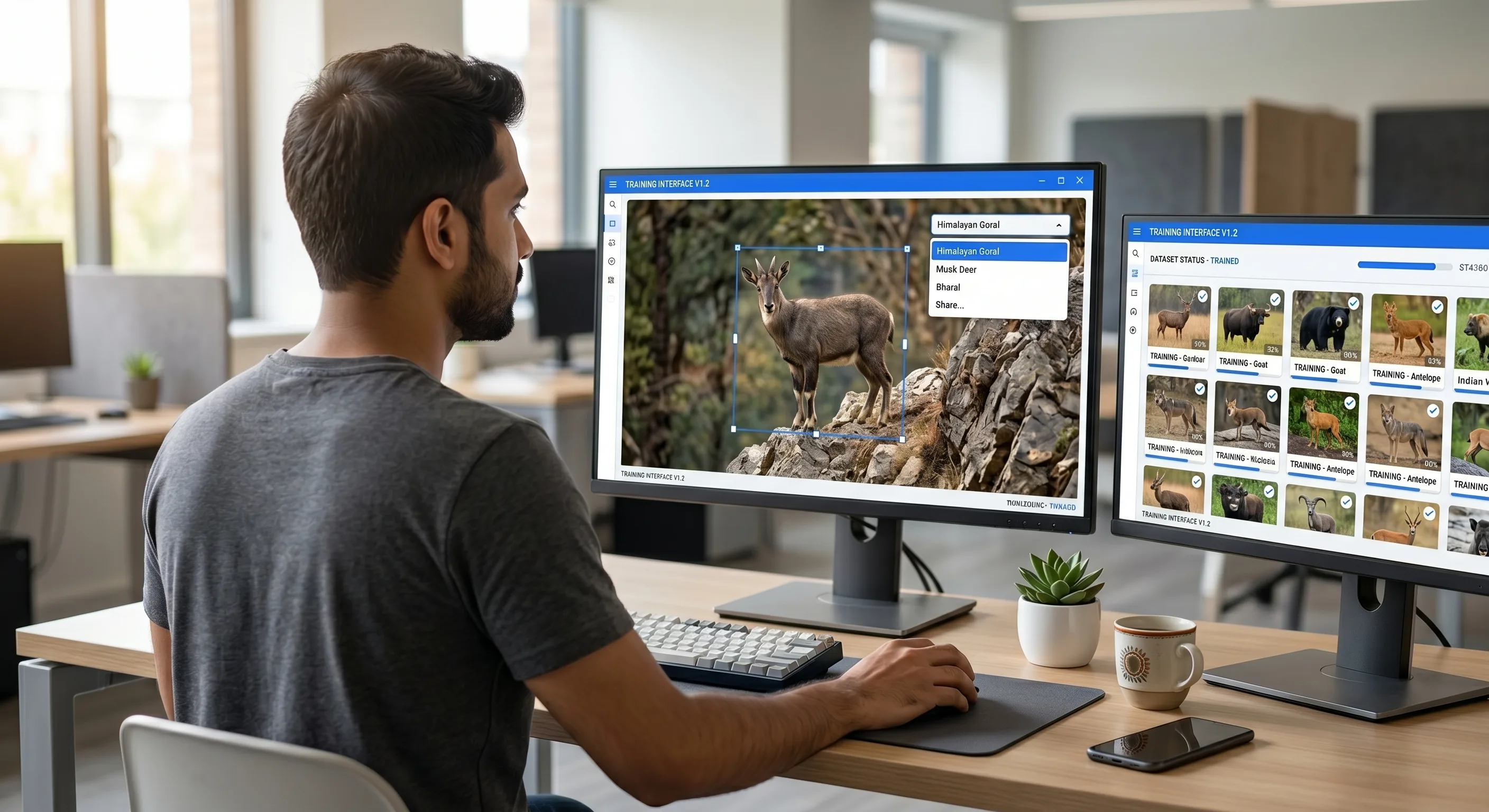
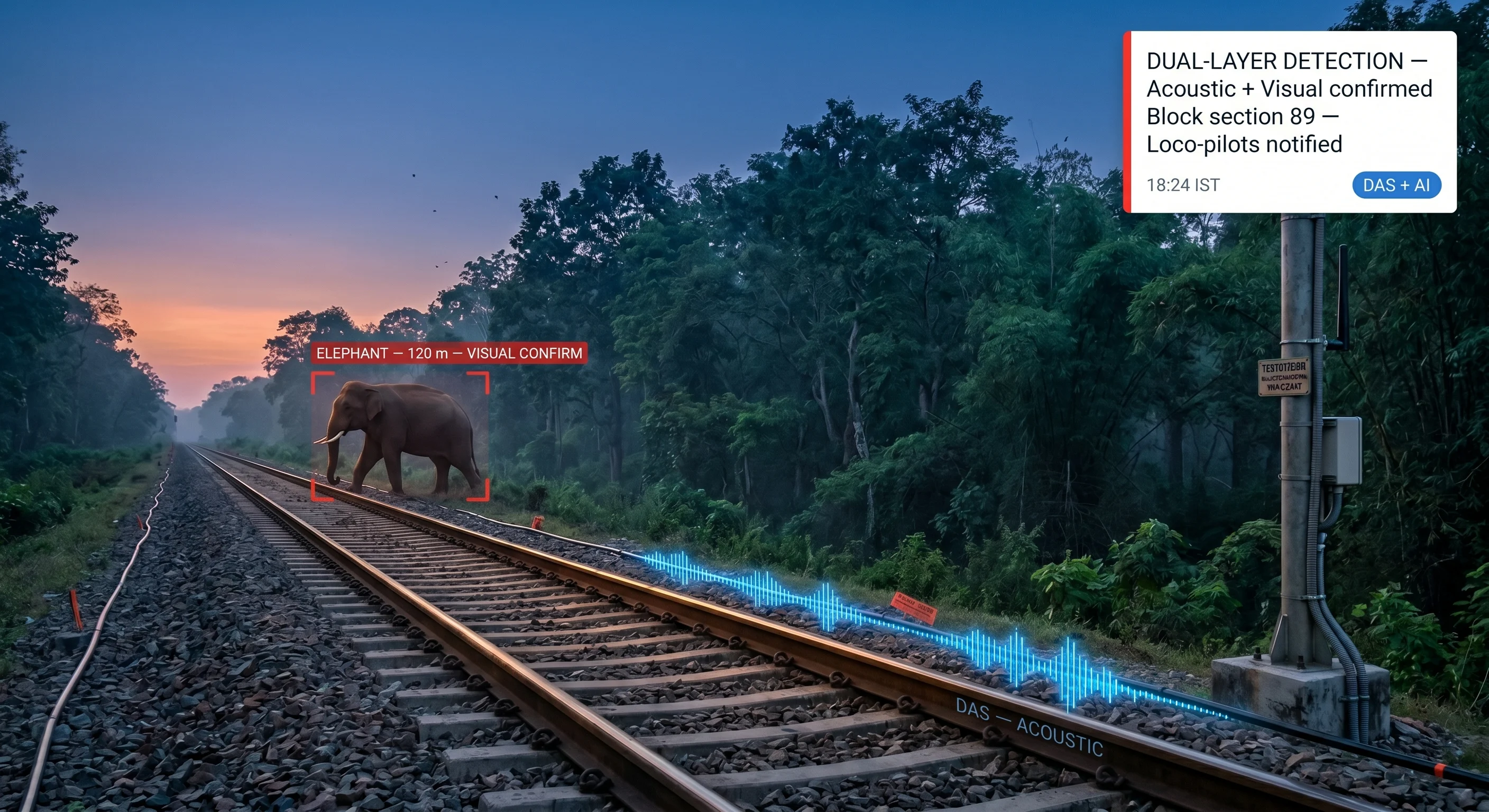
It also works in the dark — most movement and most collisions happen at night — so the AI pairs with thermal and night-vision cameras for 24/7 detection. It is one module of the broader AI Video Analytics platform, so the same cameras can run additional analytics (fire detection, intrusion, people counting) without new hardware.
Built for India's real conflict zones
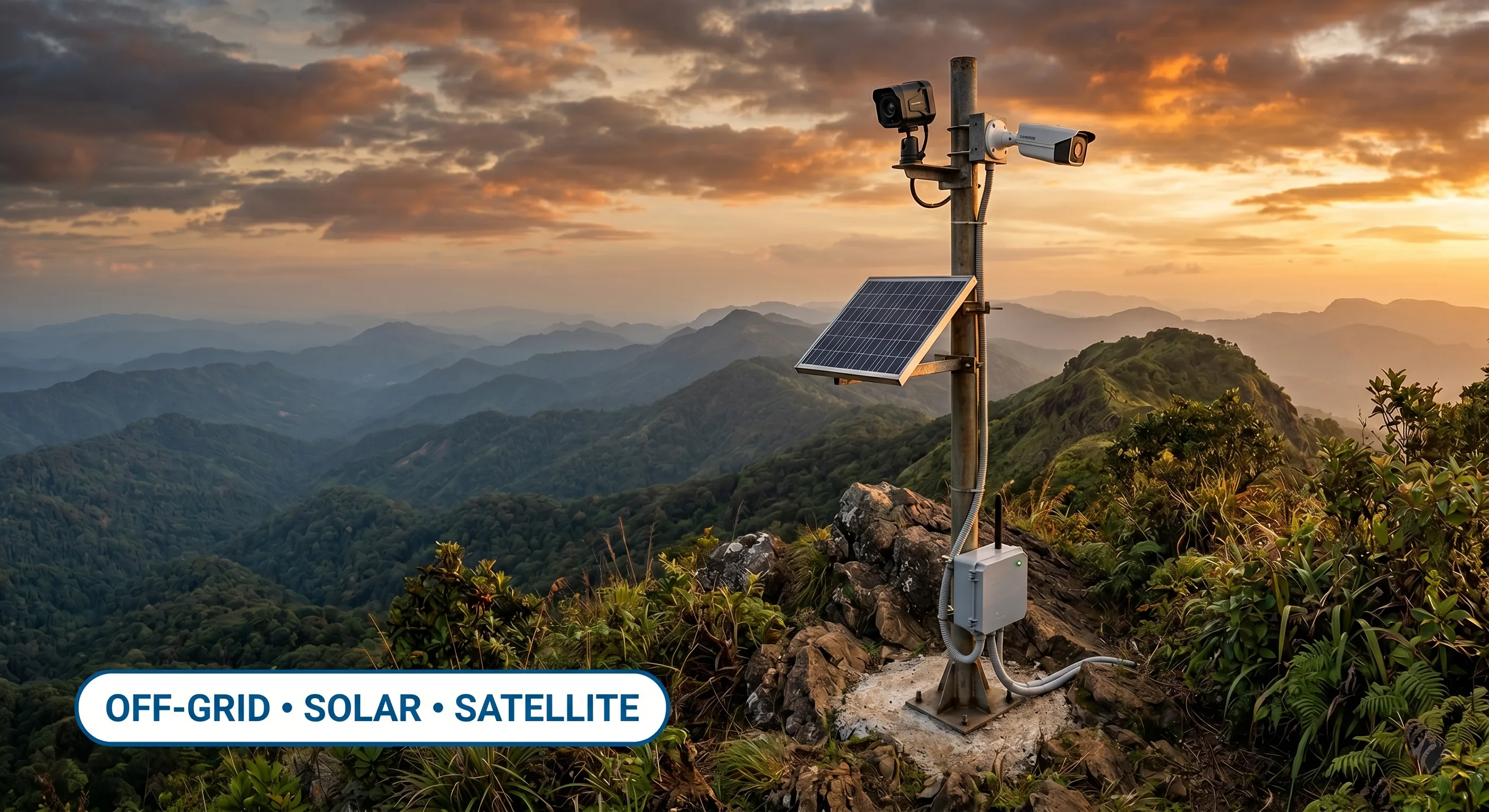
The system is built around three realities of Indian human-wildlife conflict: conflict happens where infrastructure is thin (no reliable internet, no mains power), most incidents happen at night, and authorities already have cameras on poles that aren't being used for detection. The platform addresses each of these directly — edge AI processing, thermal/IR camera support, and ONVIF/RTSP compatibility with the cameras already in the field.
How it integrates with workflows
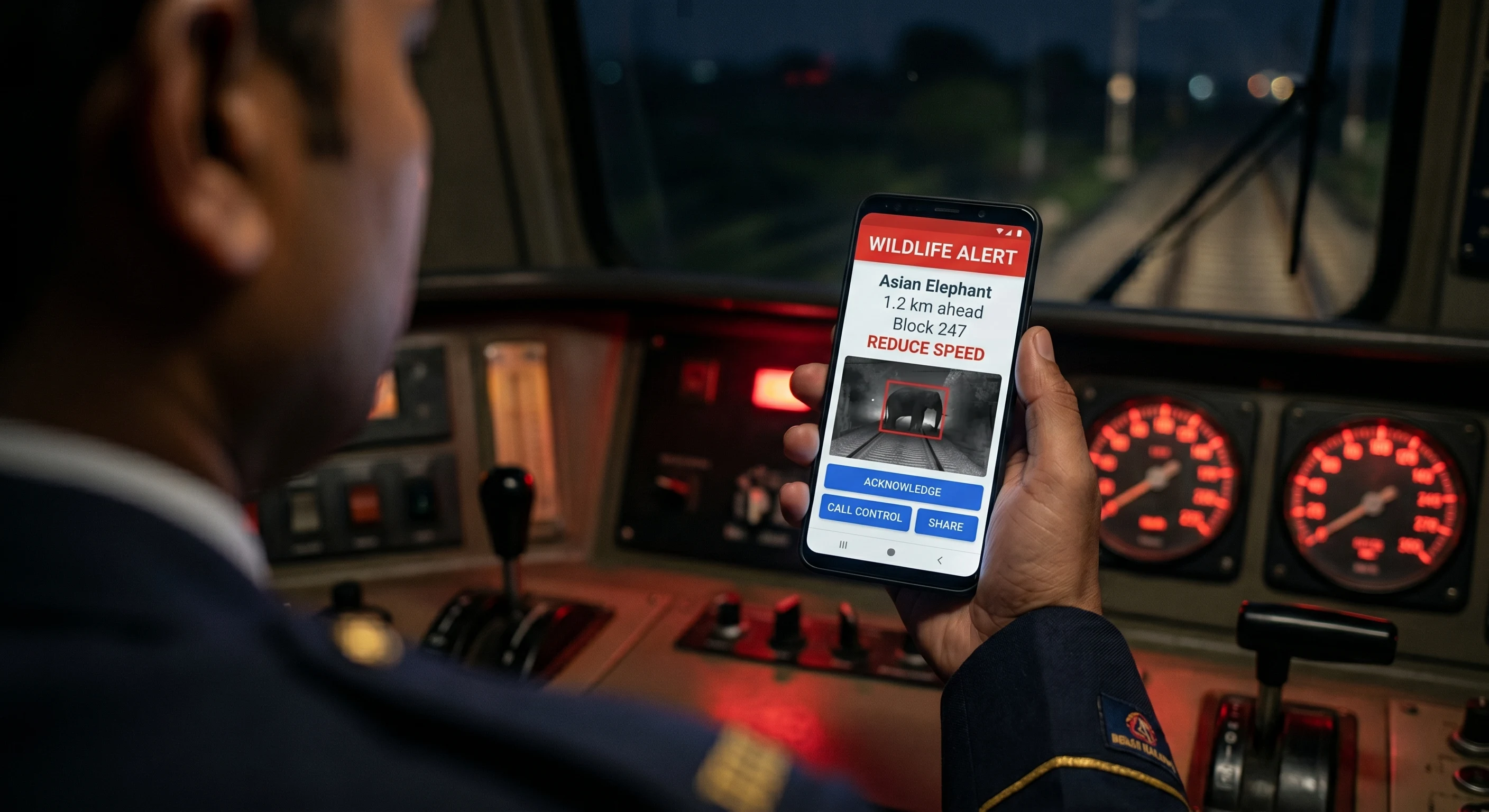
Detections route to the agency that owns the response — railway loco-pilot cab alerts, NHAI Variable Message Signs, farm-manager WhatsApp, forest-officer dashboards. The platform is designed to complement, not replace, sensor-based systems like Indian Railways' Distributed Acoustic Sensing (DAS) on elephant corridors, adding visual confirmation and species identification where fibre isn't laid.