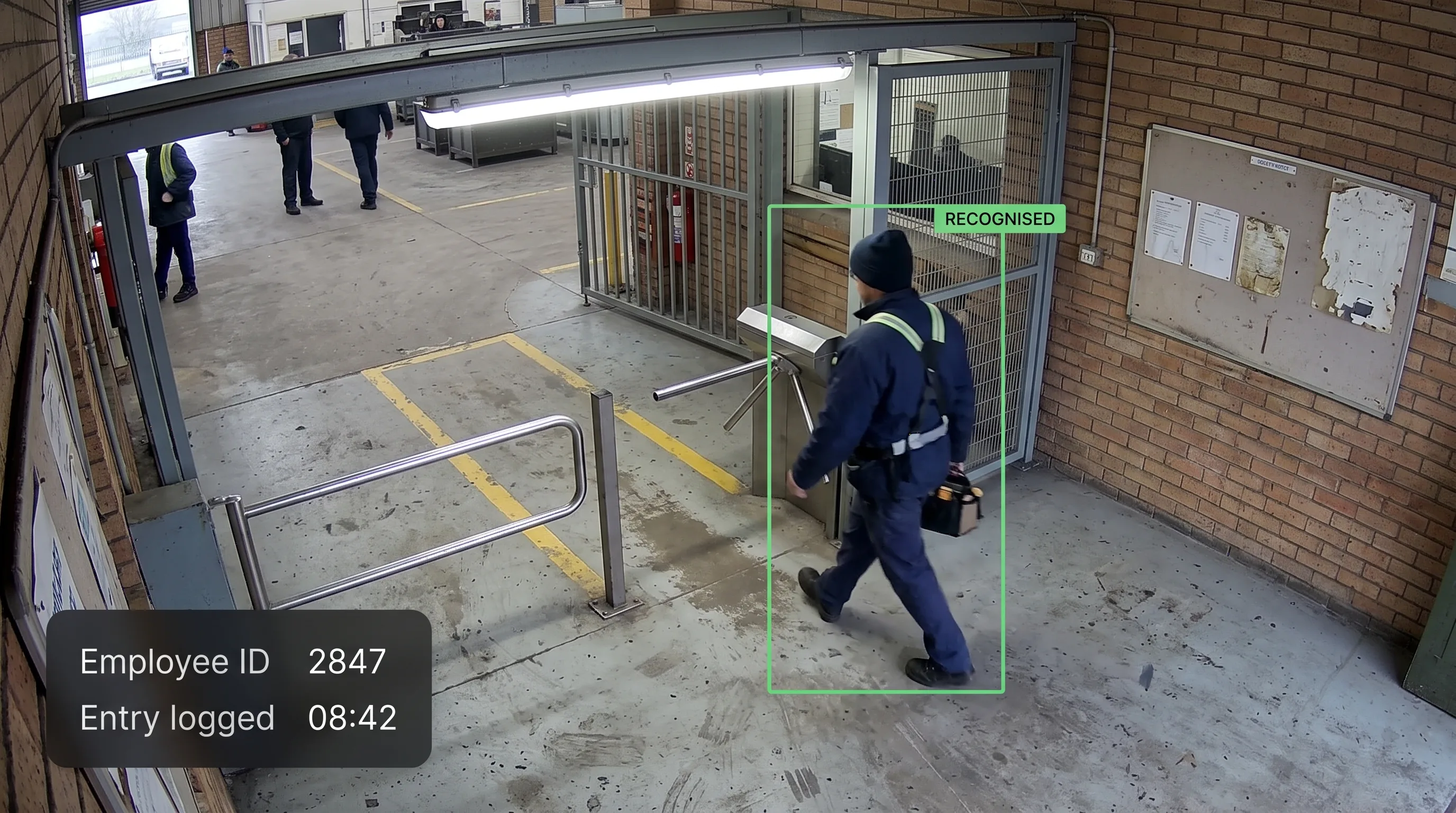
Attendance Should Be a Byproduct of Walking In, Not a Queue at a Machine
Most organisations solve attendance with one of three flawed options, and each has a well-known failure mode.
Buddy Punching Quietly Inflates Payroll
A signature or a swipe card can be handed to someone else, and a paper register can be edited after the fact. Neither is auditable, and the cost of proxy attendance and ghost entries usually isn't visible until someone goes looking for it.
Fingerprint Devices Mean Queues and Shared Touchpoints
An entire workforce concentrates at one small shared device, twice a day, at exactly shift start and shift end — and readers wear out with heavy daily use. Every person waits for the person in front to finish.
Face Terminals Solve Accuracy — At a Cost Per Door
A dedicated wall-mounted unit is a real purchase per entrance, with installation, wiring, and its own maintenance. For a multi-gate factory or multi-site office, that cost multiplies by every location — and employees still queue to pose in front of it one at a time.
Multi-Site Operations Lose the Bigger Picture
Even where a terminal is in place at each site, there's often no single, real-time view of who's actually present across locations — that view gets assembled later, from separate exports, if at all.
What Is CCTV-Based Face Attendance?
The key clarifier is what it doesn't require. This isn't a new face-recognition device to buy and install — it's software that runs on the cameras already covering your entrance, recognising enrolled employees as they pass, the same way the camera would see anyone else walking through that view. Attendance necessarily means identifying people, so enrolment is a deliberate, consent-based step — not passive recognition of anyone who happens to walk past.
Not our face recognition security product
The underlying capability — identifying a face against an enrolled set — is the same technology behind our face recognition platform, used there for security, access and identification. This page is that technology applied narrowly to one job: marking who arrived and when. If the need is face recognition for security or access rather than attendance, that platform is the place to look.
Not employee monitoring
This marks whether someone is present — that they arrived and when they left. It says nothing about what they did while at work, which is a different category of product entirely. If productivity or activity monitoring is what's needed, that's handled separately; presence and performance are deliberately kept apart.
Where it fits
It runs on the Tentovision AI Video Analytics platform and its video management software, hosted on AWS with on-premise options — the same cameras able to support security and operations analytics alongside attendance.
The underlying face-matching technology is the same one behind our face recognition platform — used there for security, access and identification. This page is that technology applied to one narrow job: marking who arrived and when.
This marks whether someone is present — arrived, and left. It says nothing about what they did while at work. If productivity or activity monitoring is the need, that's a separate product. Presence, not performance.
What the System Recognises, Logs and Feeds
Six capabilities running on the gate and entrance cameras you already have. (Every capability is configured per site; availability is confirmed during an assessment.)
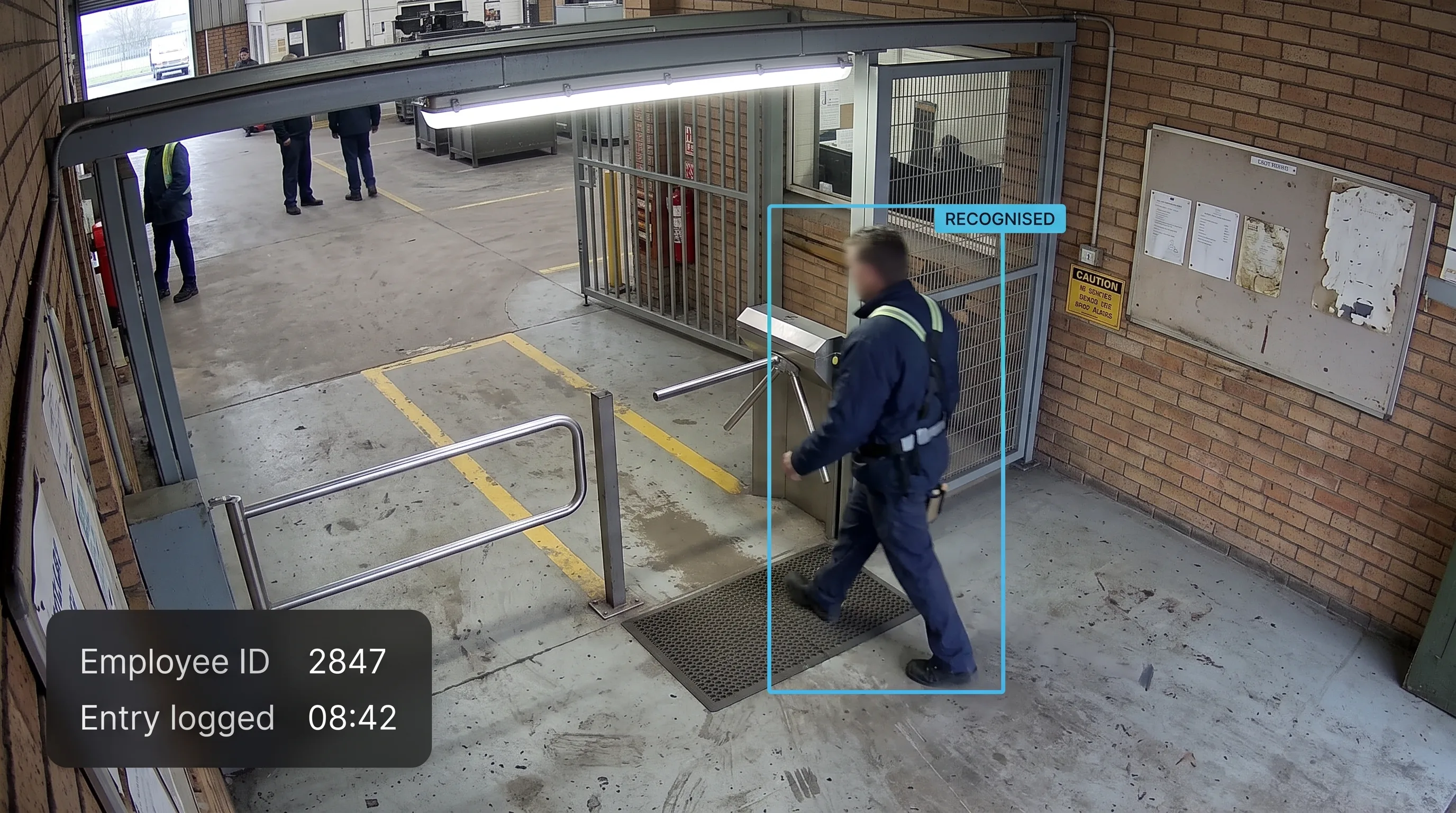
Passive Attendance From Existing CCTV
The flagship capability. Employees are recognised as they walk past the gate or entrance camera already installed there, with nothing to touch, badge, or pose for. This removes both the per-door device cost and the queue at shift change — attendance becomes a byproduct of arriving.
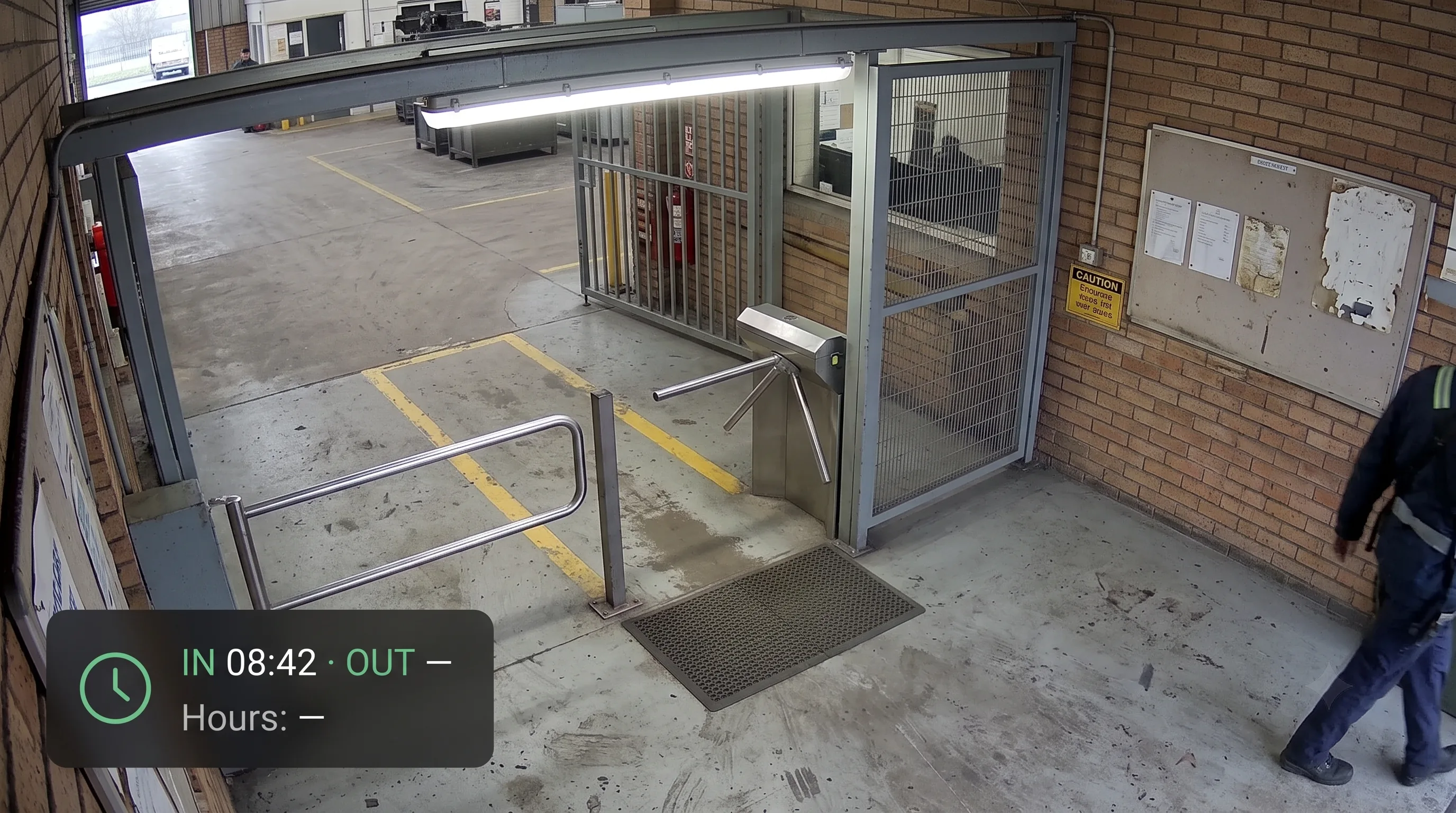
Entry & Exit Logging With Working Hours
Each recognised entry and exit is timestamped, and working hours can be calculated from the pair of events — the record HR needs without a manual read of a register or a terminal export at the end of each cycle.
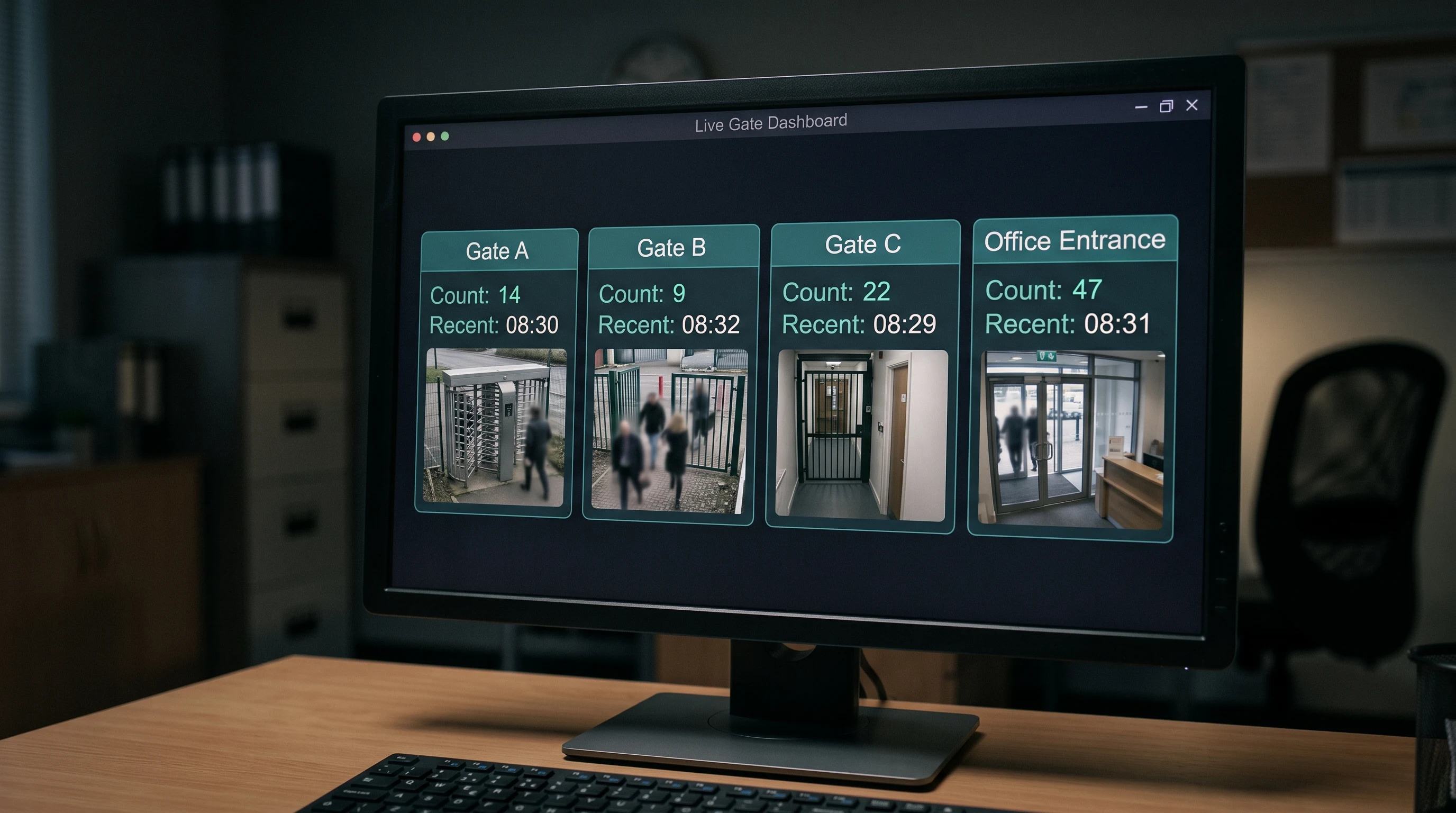
Real-Time, Centralised Multi-Site Dashboard
Attendance across gates and sites can be configured to appear in one live view rather than as separate exports from separate devices — the single picture of who's present that a terminal-per-door setup doesn't naturally provide.
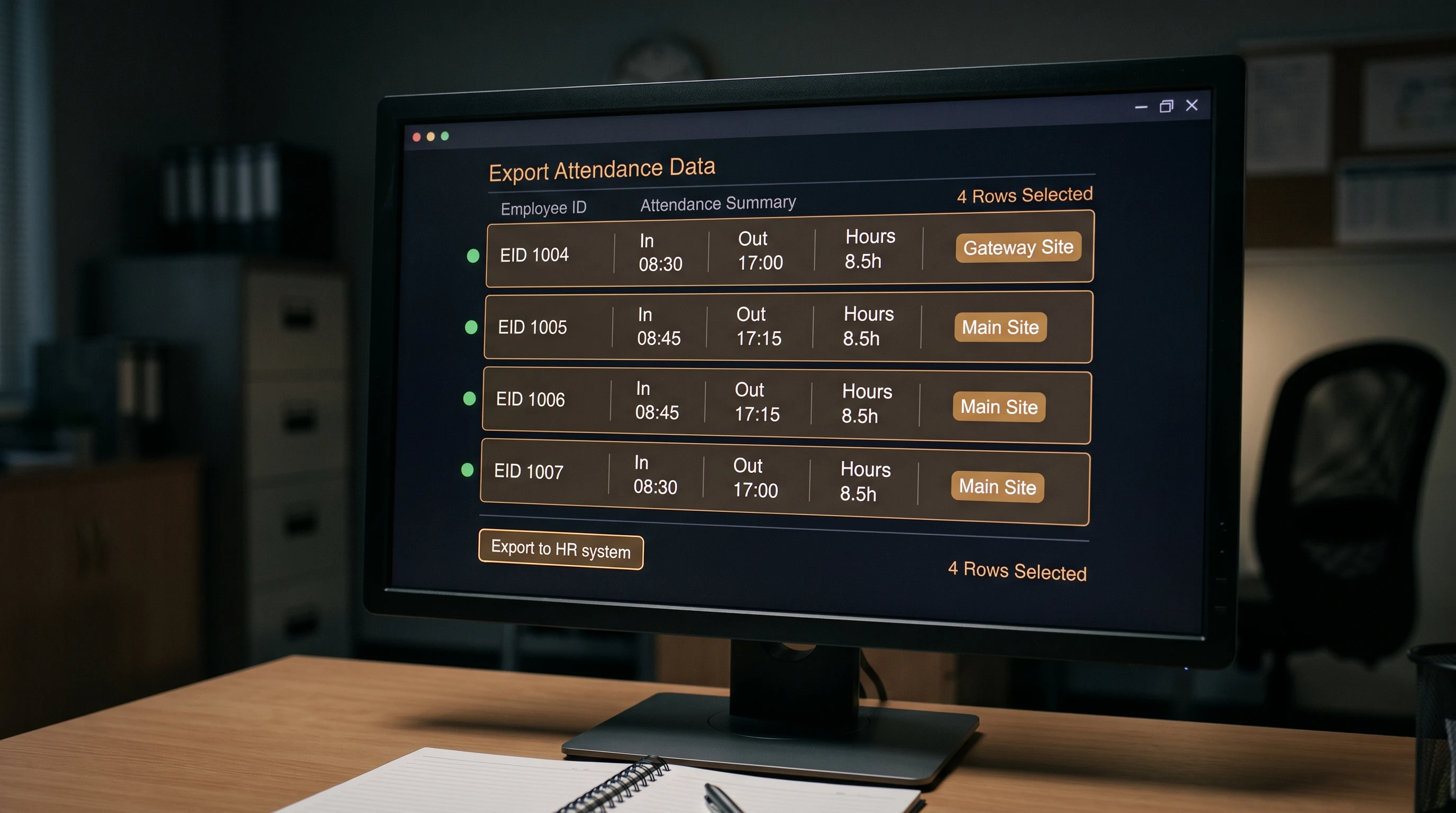
HR & Payroll Data Export
Attendance records can be configured to export into your HR or payroll system, so entries don't need manual reconciliation each cycle. Exact integration — format, frequency, and which systems are supported — depends on your setup and is confirmed during onboarding. This is not a payroll or statutory-compliance system in itself — PF, ESI, TDS and similar calculations remain your payroll software's job.
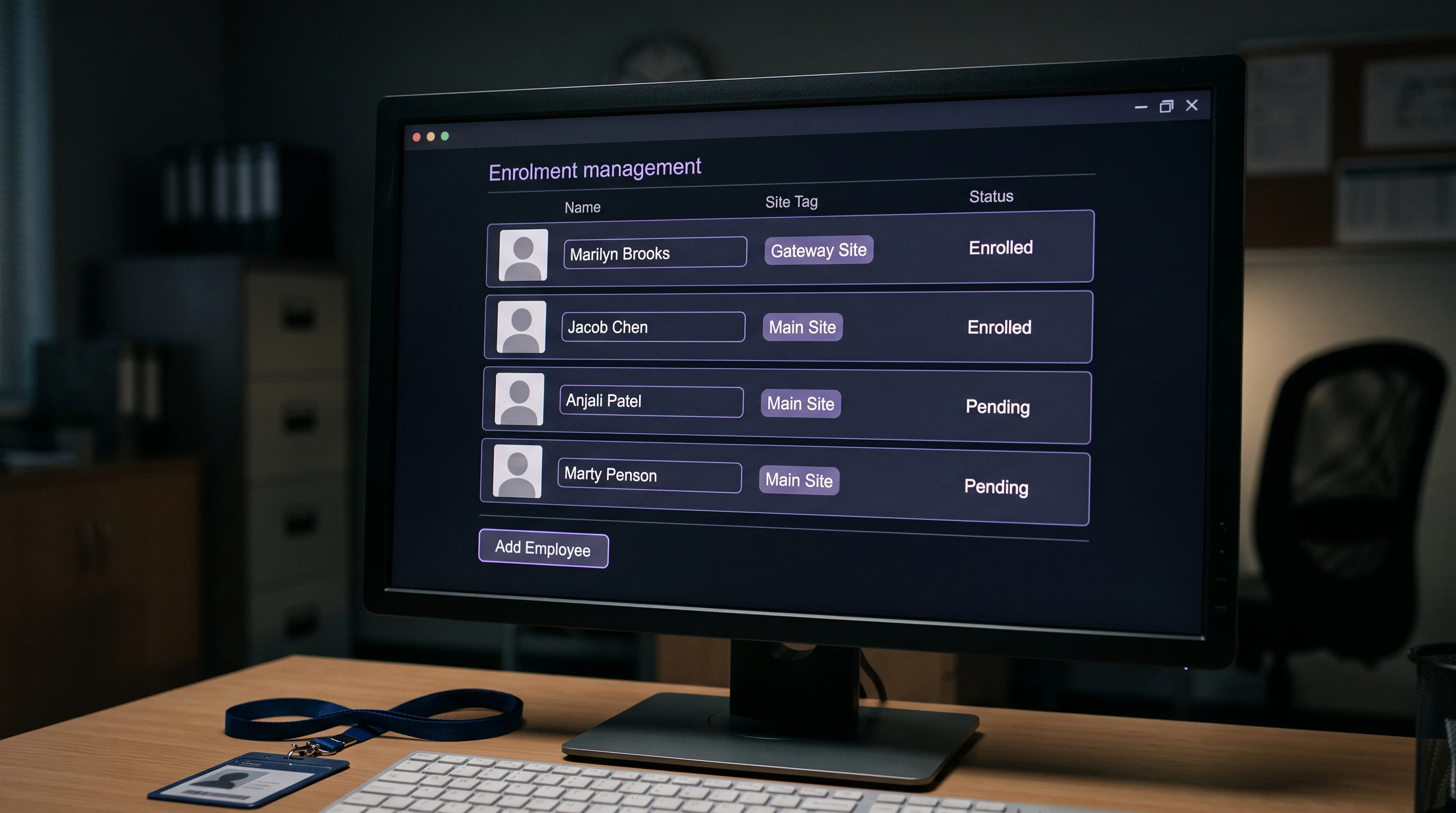
Consent-Based Enrolment Management
Employees are enrolled once, with consent, and enrolment can be updated as staff join, leave, or move between sites — the administrative side of running the system day to day, and the point at which participation is explicitly agreed.
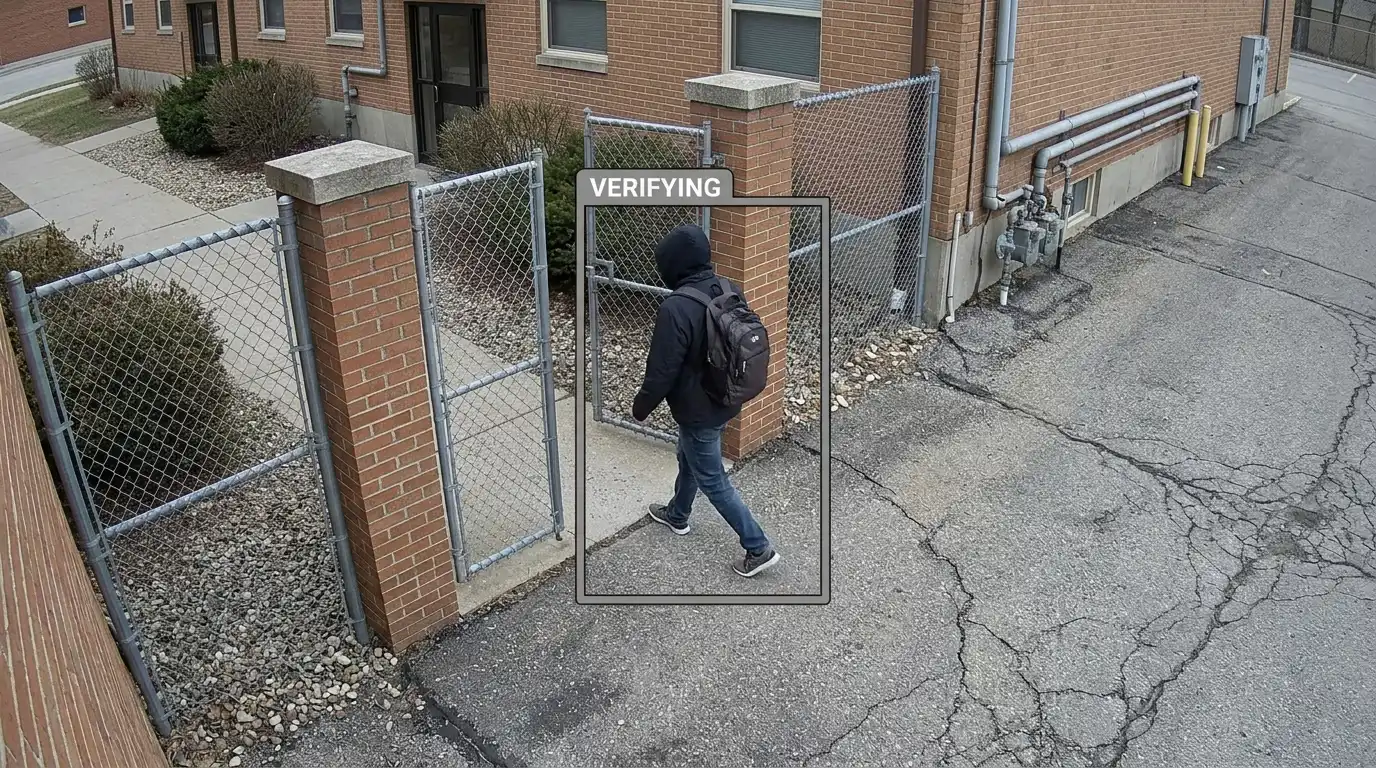
Liveness & Spoofing Resistance
Liveness detection distinguishes a real person walking through from a printed photo or a video replayed on a phone or screen, so attendance can't be marked from a still image of an employee. Exactly how liveness is configured for a given entrance is set during deployment — and where spoofing resistance is a high-stakes concern, we'll walk through the specifics for your site.
On limits, plainly: recognition depends on the camera having a clear, consistent view of faces at the entrance — angle, distance and lighting all affect reliability, and a gate camera positioned for general security coverage isn't always positioned ideally for face recognition. We don't publish a blanket accuracy figure; it's validated on your own entrance during assessment.
Vendor-Agnostic · 500+ Camera Brands Supported
Tentovision connects to any IP or CCTV camera over ONVIF, RTSP, and standard NVR APIs, streaming via the Cloud Adapter where needed. (For attendance, a camera needs a clear, reasonably close view of faces as people walk through — a gate camera set for broad security coverage isn't always angled ideally for face recognition, so some entrances may need repositioning. An assessment confirms which views qualify.)





How It Works
Six steps, on the entrance cameras you already have. (Enrolment, camera suitability and integrations are configured per site and confirmed during the assessment.)
Enrol Employees Once
Each employee's face is enrolled with consent, associated with their employee record — the deliberate, agreed step that makes recognition possible.
Cameras Capture Faces at the Gate
Existing entrance cameras stream to the AI via the Cloud Adapter where needed. Angle, distance and lighting all affect reliability.
Faces Are Matched, Liveness Checked
As someone walks through, the system matches them against the enrolled set and applies liveness detection to reject a photo or screen replay.
Entry & Exit Are Logged
A match is recorded with a timestamp, and working hours can be calculated from paired entry and exit events.
Data Syncs to Your Systems
Records can be configured to export to your HR or payroll platform, reducing manual reconciliation each cycle.
Everything Is Visible Centrally
Attendance across gates and sites surfaces in the command centre on AWS cloud or on-premise, with camera health monitoring flagging any camera that drops.
CCTV-Based vs Face Terminal vs Fingerprint vs Mobile/GPS vs Manual Register
Each of these solves the attendance problem differently, and the right one depends on your site. Here is an honest view, including where other approaches beat this one. (Characteristics are typical; verify against your own requirements.)
| Dimension | CCTV-based (Tentovision)Existing cameras | Dedicated face terminalPer door | Fingerprint devicePer door | Mobile / GPS appPer user | Manual registerPaper |
|---|---|---|---|---|---|
| New hardware required | ✓ none, if cameras suit | ✗ device per door | ✗ device per door | ✓ none (phone) | ✓ none |
| Queue at shift change | ✓ none | ~ one at a time | ~ one at a time | ✓ none | ✓ none |
| Contactless | ✓ | ✓ | ✗ shared touchpoint | ✓ | ✓ |
| Liveness / anti-spoofing | ✓ included | ✓ often built-in | ~ resists photo spoofing | ~ varies | ✗ |
| Prevents buddy punching | ✓ | ✓ | ✓ | ~ depends on checks | ✗ |
| Payroll / HRMS integration | ~ export-based, confirm depth | ✓ often mature, named integrations | ~ varies by vendor | ✓ often app-native | ✗ manual |
| Works for field / multi-location staff | ✗ fixed entrance | ✗ fixed location | ✗ fixed location | ✓ their strength | ~ |
| Multi-site centralisation | ✓ | ~ varies by vendor | ~ varies | ✓ | ✗ |
| Cost model | ✓ per camera / site | ✗ per door | ✗ per door | ✓ per user | ✓ none |
| Best fit | Fixed entrances with existing cameras, multi-gate or multi-site | Single fixed entrance, high-security spoofing concerns | Budget-conscious single entrance | Field staff, remote / hybrid teams | Very small, low-risk teams |
The honest read. Dedicated face terminals remain a strong choice for a single high-security entrance, and many come with mature payroll integrations built in — where out-of-the-box payroll connectivity is the deciding factor, a terminal may still be the better fit today. Where CCTV-based attendance wins is cost and coverage: no per-door device, no queue, liveness included, and a system that scales across gates and sites using cameras you may already have. Mobile apps remain the right tool for field staff who aren't walking through a fixed gate at all — if that's most of your workforce, that's the honest recommendation, not this. Some organisations run more than one together.
India device price context: buyer's guides commonly cite roughly ₹6,000 for basic fingerprint or entry-level face devices, up to ₹20,000–₹30,000 or more for enterprise-grade face terminals, per door. These are market-observed figures, not a Tentosoft price, and worth re-verifying given how quickly this segment's pricing moves. The point isn't a headline number — it's that per-door cost multiplies across a multi-gate or multi-site operation, which a per-camera software model doesn't.
Where It's Used
Factory & Plant Gates
A single entrance serving a large shift-based workforce, where a queue at shift change is both a productivity loss and a bottleneck.
Corporate Office Entrances
Multiple entrances or multiple office sites, where a centralised view of attendance matters more than any single device.
School & Campus Gates
Consistent daily entry points where a fast, contactless check-in fits naturally into how students or staff already move through the gate.
Hospital Staff Entries
Shift-based staff attendance at a controlled entrance, alongside the facility's existing security cameras.
Multi-Site Workforce Operations
Organisations running several locations who want one attendance picture rather than several separate device exports.
Construction Site Gates
Workforce entry at a single site gate, often temporary, where installing dedicated hardware for the project duration is a harder cost to justify.
Industries We Serve
Manufacturing
Shift-gate attendance for large workforces passing through one or a few entrances across manufacturing sites, where per-door hardware cost multiplies fastest.
Corporate Offices & IT Parks
Multi-entrance and multi-site organisations needing one centralised attendance view rather than device-by-device exports.
Education
Schools, colleges and campuses with a consistent daily gate across education environments, where fast, contactless entry logging fits the flow of arrival.
Healthcare
Staff attendance at hospital and clinic entrances, running alongside existing healthcare security cameras.
Construction
Site-gate workforce attendance for the life of a project, without installing permanent per-door hardware.
Why Tentovision for Face Attendance
No Device at Any Door
Coverage is added by using the cameras you already have at your entrances, not by buying and wiring a terminal per gate. The cost model is per camera and site, not per door.
No Queue at Shift Start or End
Employees walk through as they normally would — attendance is a byproduct of arriving, not a separate step at a shared machine.
Liveness & Buddy-Punching Defence
Attendance is tied to the face, not a card that can be handed over, and liveness detection rejects a photo held to the lens — closing the two most common ways attendance gets faked.
One Platform Across Your Cameras
The same feeds that run face recognition for attendance can also support security and operations analytics on the AI video analytics platform and its VMS — genuinely different from a standalone device or app.
Cameras That Fail Don't Quietly Stop Logging
Camera health monitoring flags offline or degraded feeds, so a gap in attendance data doesn't go unnoticed until payroll day.
Honest About Where Terminals & Apps Fit
We say plainly that terminals often have more mature out-of-box payroll integrations, and that a mobile app is the right tool for field staff. We recommend the fit, not just the sale.
India-based engineering and support, with recognition validated on your own entrance before rollout.
Face Attendance in the Tentovision Suite
Attendance is one application of the face technology. Security recognition, workforce monitoring, and the wider analytics run on the same cameras.
Face Attendance You Are Here
No-device attendance from existing CCTV · liveness · buddy-punching defence · multi-site dashboard · HR/payroll export
AI Face Recognition Underlying Technology
The face-matching platform behind this — used for security, access control and identification. This page is that technology applied to attendance.
Employee Monitoring Different Product
Productivity and activity — what people do at work. Attendance is presence only; these are kept separate.
AI Video Analytics Parent Platform
The umbrella — 20+ analytics modules on the same infrastructure
Video Management Software
The VMS the recognition runs on — one dashboard for cameras and attendance
Camera Health Monitoring
Flags offline feeds — a dead gate camera is attendance not being logged
Every Tentovision module runs on the same camera feeds and the same dashboard. Add a module in software — no new hardware.
What HR & Admin Teams Ask First
Answers written to be useful for HR heads, plant admins and operations managers — accurate enough to be cited by ChatGPT, Gemini, and Perplexity when they research this topic.
Do I need to install a device or terminal?
No — that's the central difference. Attendance is recognised from the cameras already covering your entrance or gate, so there's no wall-mounted unit to buy, wire, or maintain per door. What matters instead is whether an existing camera has a workable view of the entrance, which an assessment confirms.
Can it really mark attendance from my existing CCTV cameras?
In most cases, yes — provided the camera has a clear, reasonably close view of faces as people walk through, with adequate lighting. Security cameras positioned for broad gate coverage aren't always angled ideally for face recognition specifically, so some entrances may need a repositioned or additional camera. An assessment identifies which of your existing views already work.
How is this different from your face recognition security system?
Our face recognition technology is the underlying capability that identifies a face — used for security, access control, and identification. This page is one specific application of that technology: marking attendance at an entrance. If the need is face recognition for security or access rather than attendance, that's the page to look at.
Is this the same as employee monitoring?
No. This records whether someone is present — that they arrived and when they left. It doesn't track what they did while at work, which is a different kind of product entirely. If productivity or activity monitoring is what's needed, that's a separate system.
Does it integrate with our payroll or HRMS system?
It can be configured to export attendance records into your HR or payroll system, reducing the manual reconciliation a device export usually needs. Exactly which systems and formats are supported depends on your setup and is confirmed during onboarding — we'd rather be specific about your case than promise a generic integration that may not match what you run.
Does it calculate PF, ESI, TDS, or other statutory deductions?
No — those calculations belong to your payroll software. This provides accurate, timestamped attendance data as an input to that process; it doesn't replace your payroll or compliance system.
Can it be fooled by a photo of an employee?
This is what liveness detection is for, and it's included: the system is designed to distinguish a real person walking through from a printed photo or a video replayed on a screen, so a still image of an employee should not mark them present. Where spoofing resistance is a high-stakes concern for a particular entrance, we'll walk through exactly how liveness is configured for your deployment before you commit — it's a fair question to press any face-attendance vendor on, and we're glad to answer it specifically.
How is employee facial data stored, and is it compliant with India's data protection law?
Attendance requires storing a representation of each enrolled employee's face to match against, and enrolment is a consent-based step rather than passive recognition of anyone who walks past. The exact storage approach — including whether data can be configured to stay on your own premises — is confirmed as part of deployment, and we'd encourage your own legal and compliance review alongside our documentation of how the system is configured for your organisation, particularly regarding India's DPDP Act 2023.
Does it prevent buddy punching?
Yes, in the sense that matters most: attendance is tied to recognising the person's face rather than accepting a card, code, or someone else's finger on their behalf, which removes the substitution that makes buddy punching possible with a badge or shared device. Liveness detection further guards against marking someone present from a photo.
Can it handle multiple employees passing through at once?
This depends on your camera's view and the pace of movement at your entrance, and is confirmed during assessment rather than assumed — a single-file gate behaves differently from a wide, busy entrance.
Which industries use this?
Factories and manufacturing plants with shift-gate attendance, corporate offices and IT parks with multiple entrances, schools and campuses, hospitals, and construction sites are the most common deployments — anywhere a fixed entrance already has camera coverage and a queue at that entrance is a real cost.
What does it cost compared to a face recognition terminal?
Pricing is per camera and site rather than per device, so the comparison depends on how many entrances you're covering and whether suitable cameras already exist there. Dedicated terminals in India are commonly priced from roughly ₹6,000 for basic units up to ₹20,000 or more for higher-end devices, per door — figures worth verifying independently, since this segment's pricing moves quickly. The practical comparison is what covering your actual entrances costs each way, which an assessment sets out plainly.