
























Detect Speeding Vehicles on Your Roads — Using Existing CCTV, No Radar
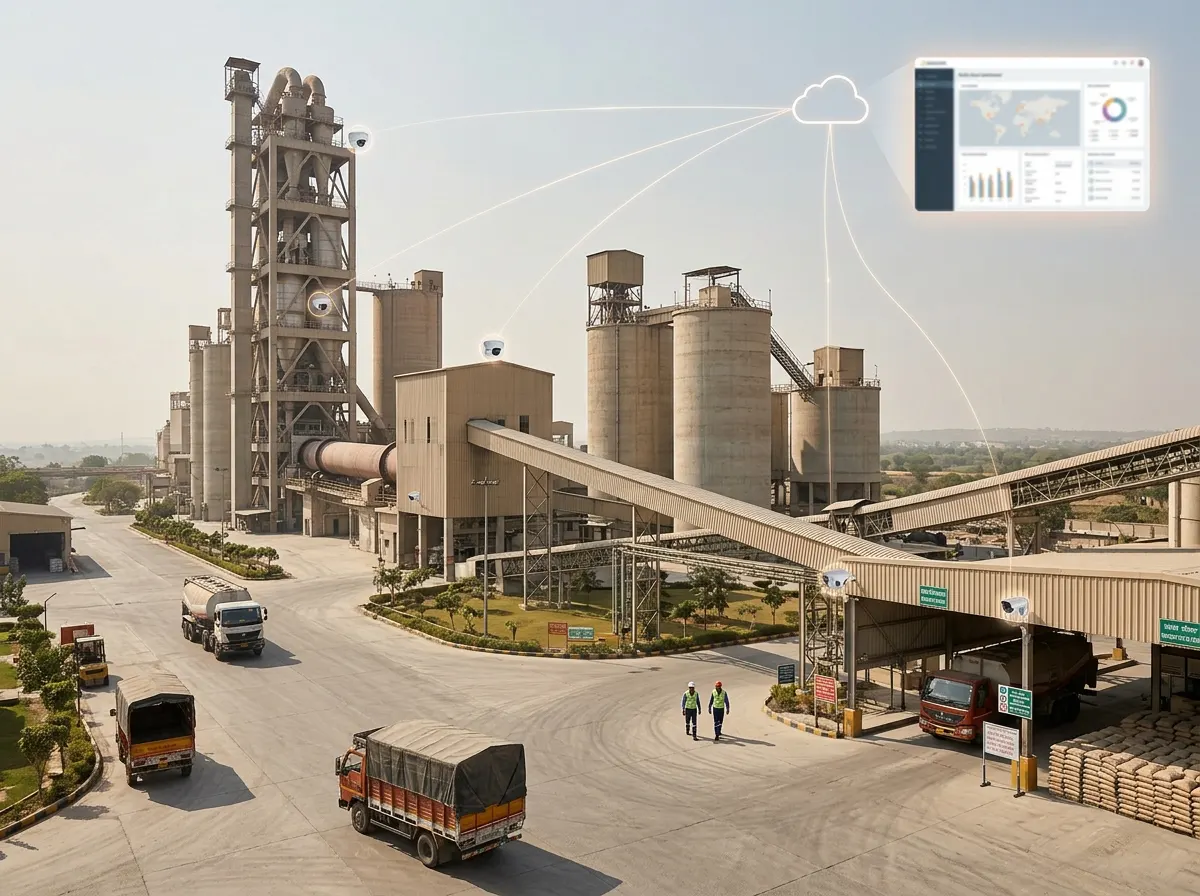
Your internal roads are posted at 25 km/h, but cabs, staff cars, and delivery vans ignore it — especially near gates, canteens, and residential blocks. Signage doesn't stop repeat speeders, and security can't clock every vehicle by eye. Tentosoft's overspeed detection system runs on your existing cameras to catch speeding vehicles, capture the number plate, alert your security team in real time, and log repeat offenders — no radar guns required.
"Speeding-related crashes account for nearly half of all road accidents in urban areas — and on private campus and township roads, most of that speeding is never recorded, warned, or escalated."— Context: Ministry of Road Transport & Highways (MoRTH), India
Large campuses, townships, gated communities, and industrial parks carry constant mixed traffic — staff cars, cabs, two-wheelers, delivery vans, and heavy vehicles sharing the same internal roads as pedestrians. Yet the tools most sites rely on to slow them down simply don't work at scale.
Painted limits and speed bumps are passive. Habitual speeders learn where the breakers are and accelerate everywhere else. Excessive breakers also damage vehicles, slow emergency response, and frustrate residents — without ever identifying who is actually speeding.
A security team cannot clock every vehicle on every internal road, across every shift. Spot checks catch a fraction of violations, create confrontation at the gate, and leave the busiest hours — shift change, school pickup, late-night deliveries — almost entirely unmonitored.
Without a log of who sped, when, and where, there's no way to escalate. A vendor's driver who speeds daily gets treated the same as a one-time visitor. There's no evidence to issue a warning, brief a transport contractor, or restrict a repeat offender's gate access.
It usually takes one near-miss near a gate or residential block for speeding to become a board-level priority. On private property, the site operator carries duty-of-care. A serious incident with no monitoring record in place is both a safety failure and a liability exposure.
Four core capabilities that turn passive CCTV into an active layer of vehicle speed governance across your roads.
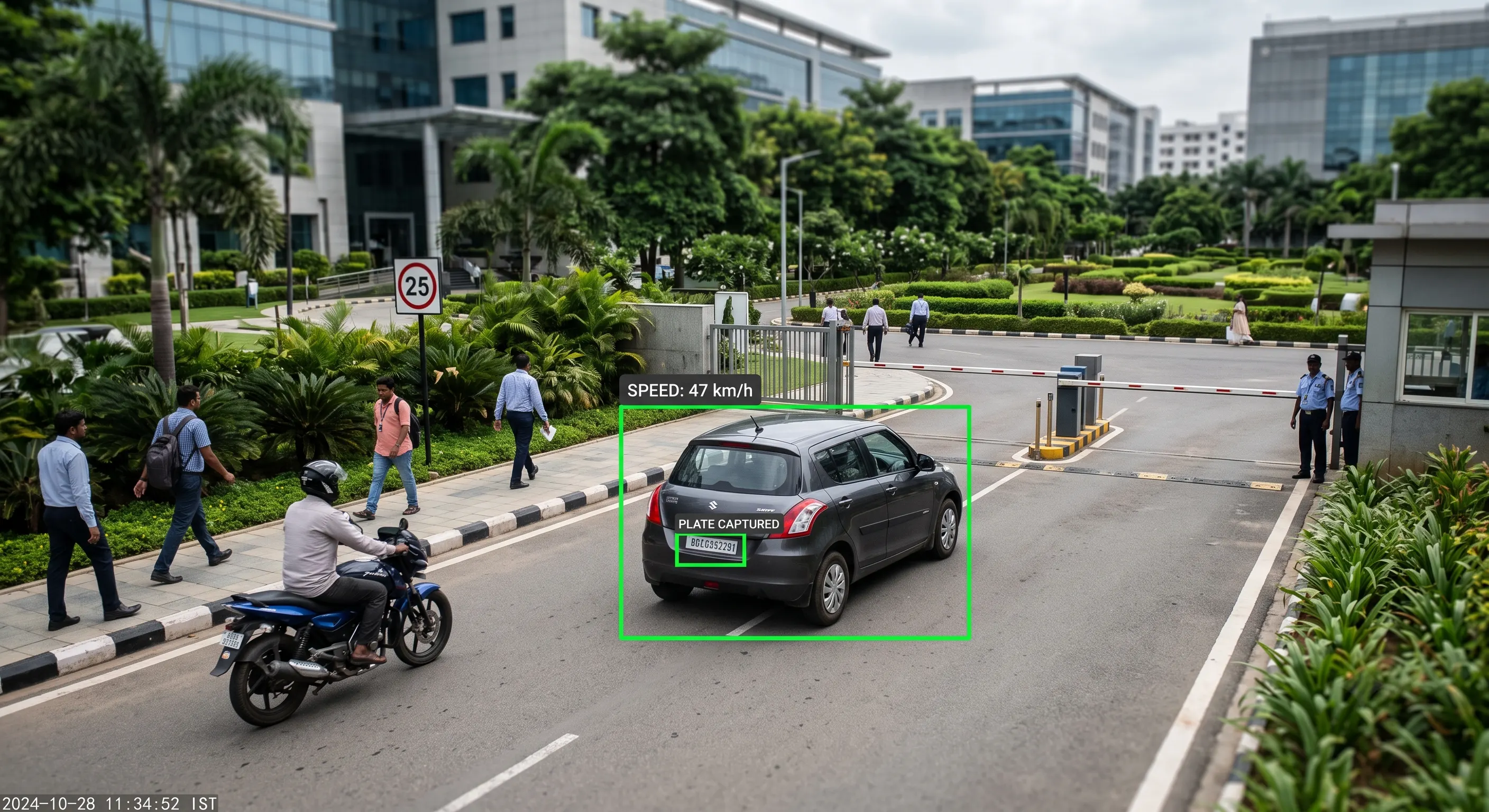
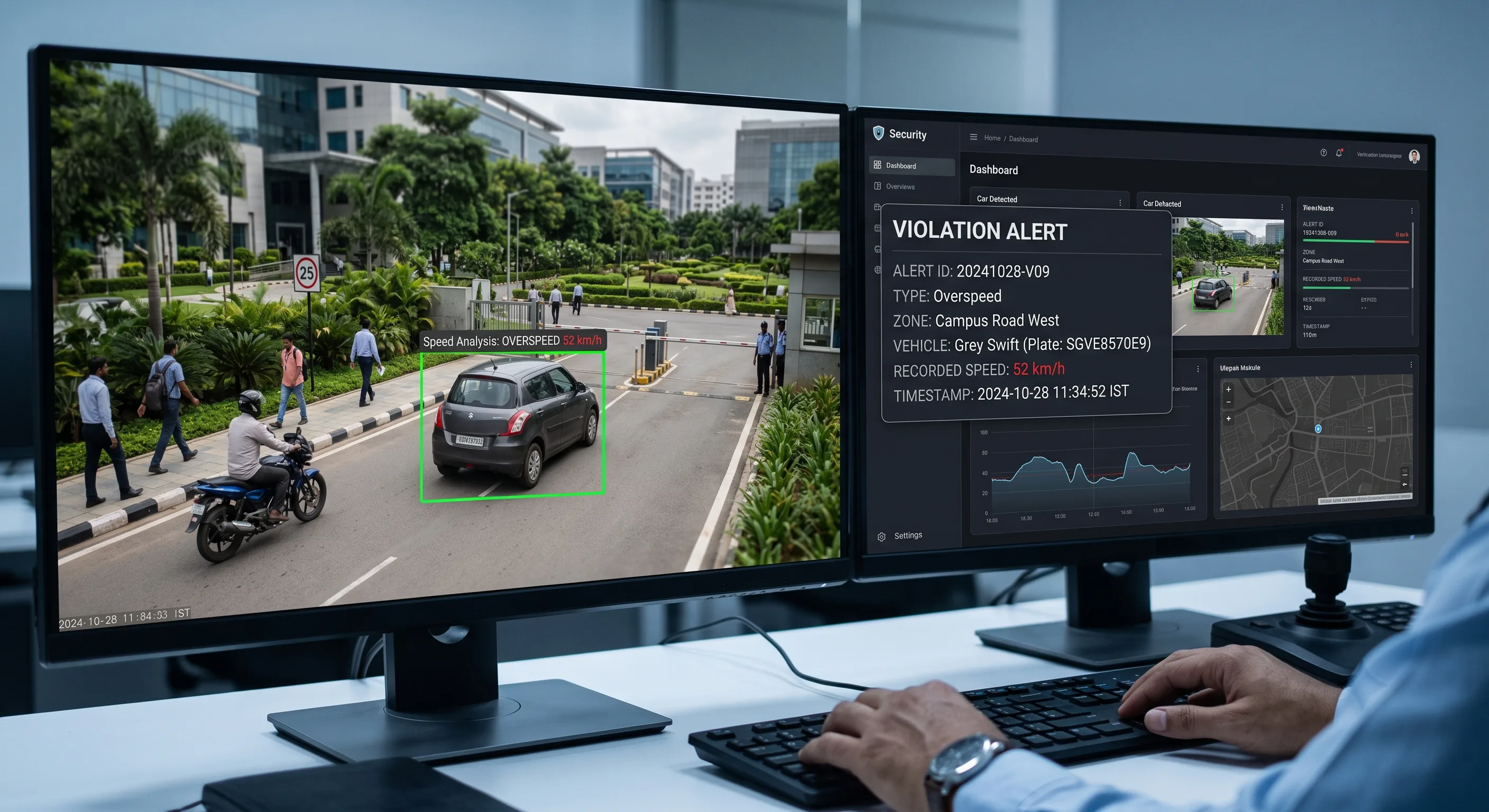
The AI continuously measures vehicle speed across every monitored road and flags any vehicle that crosses the configured limit — typically within a second of the event. Alerts can be configured to reach your security control room instantly, so a speeding vehicle is a live event, not a line found later in a report.
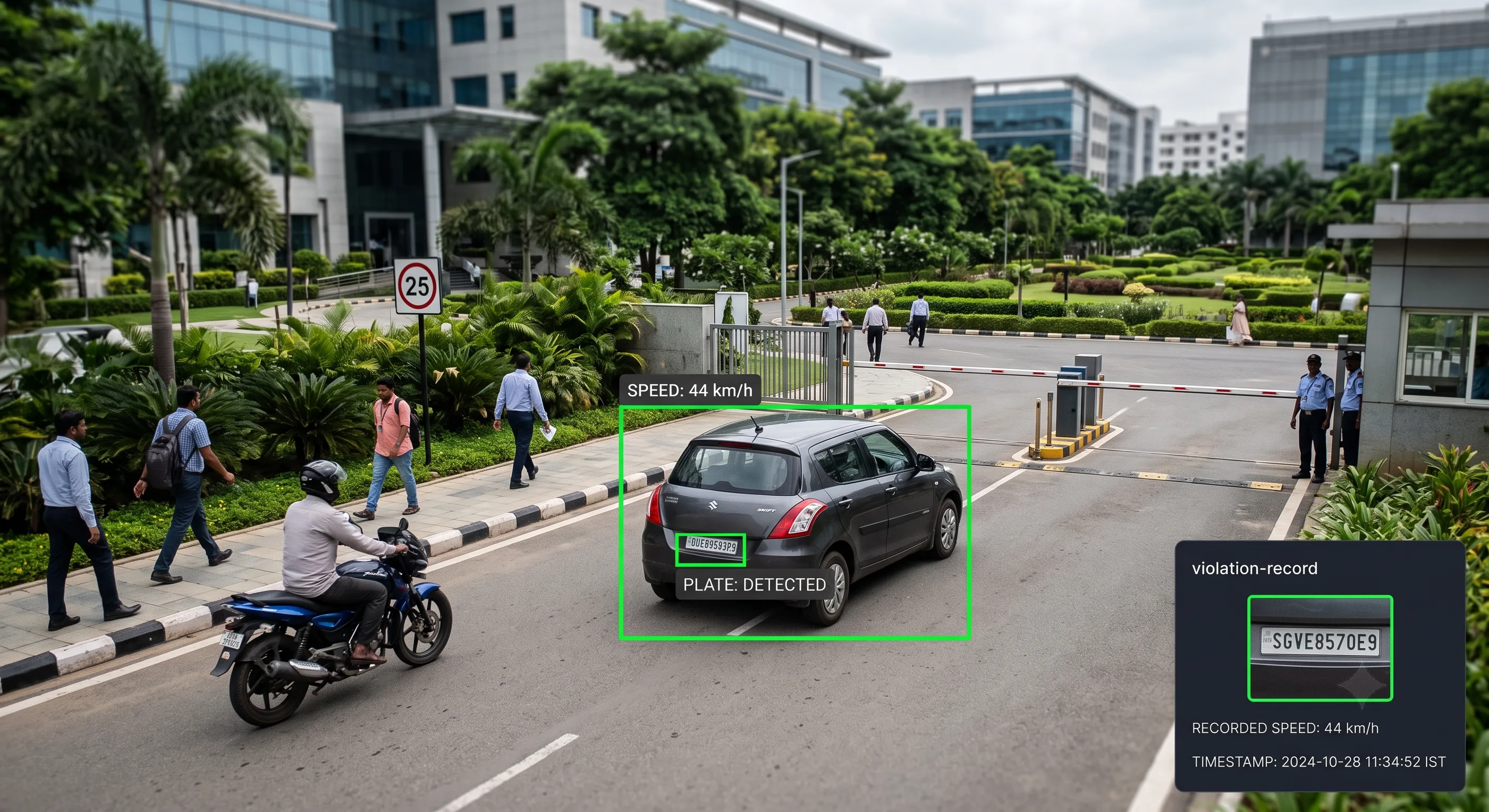
Detecting speed is only half the story; you need to know which vehicle. TentoVision can be configured to pair overspeed detection with plate capture, so every event carries the vehicle's number plate alongside its speed — turning a speed reading into an actionable violation record. Plate reading is powered by our automatic license plate recognition (ANPR) capability.
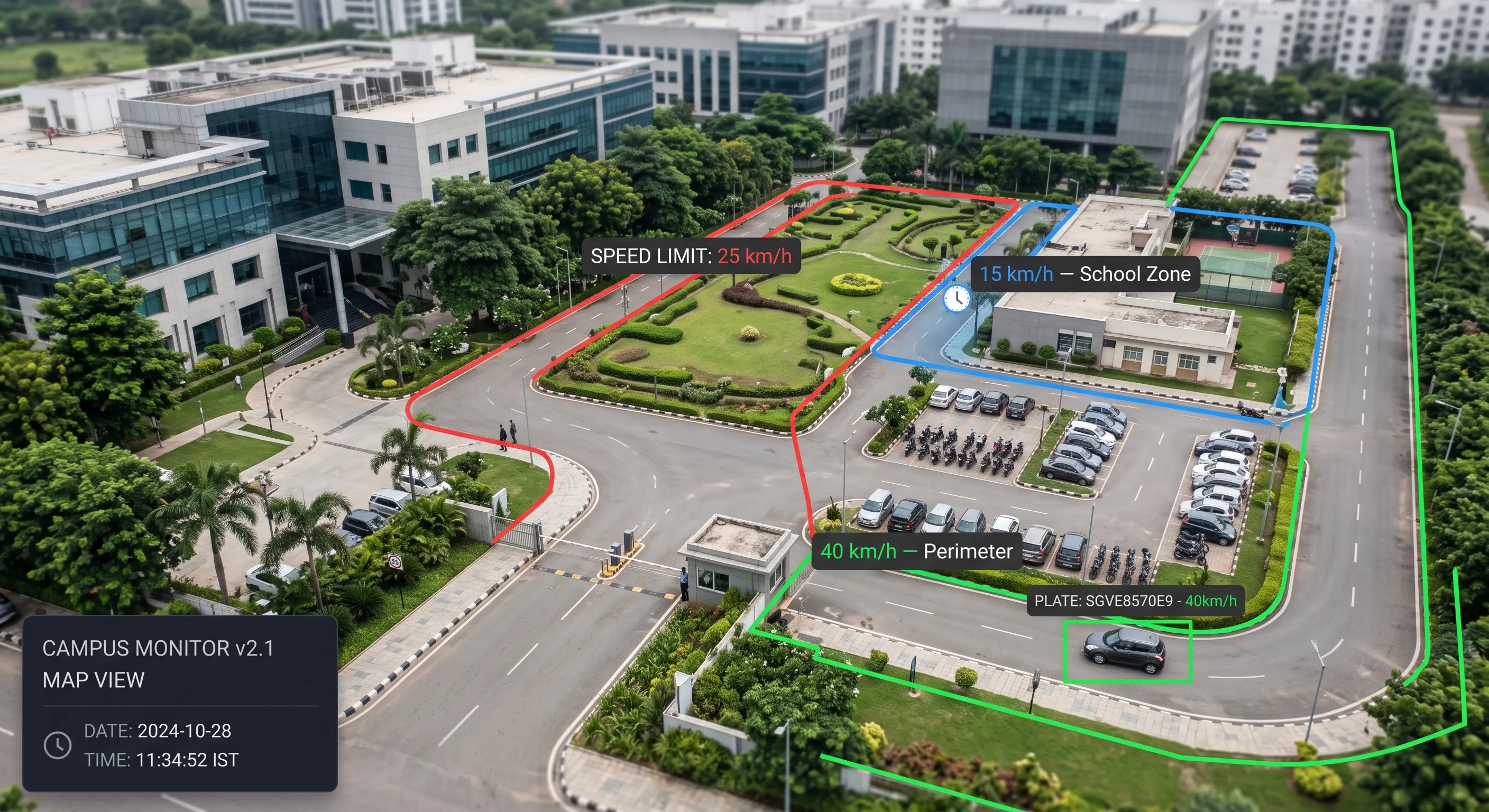
One speed limit rarely fits a whole site. Detection rules can be configured per road and per time window — a stricter limit near residential blocks, schools, or canteens, and a different threshold on perimeter roads. Limits can also tighten during high-risk windows such as shift change, school hours, or late-night deliveries.
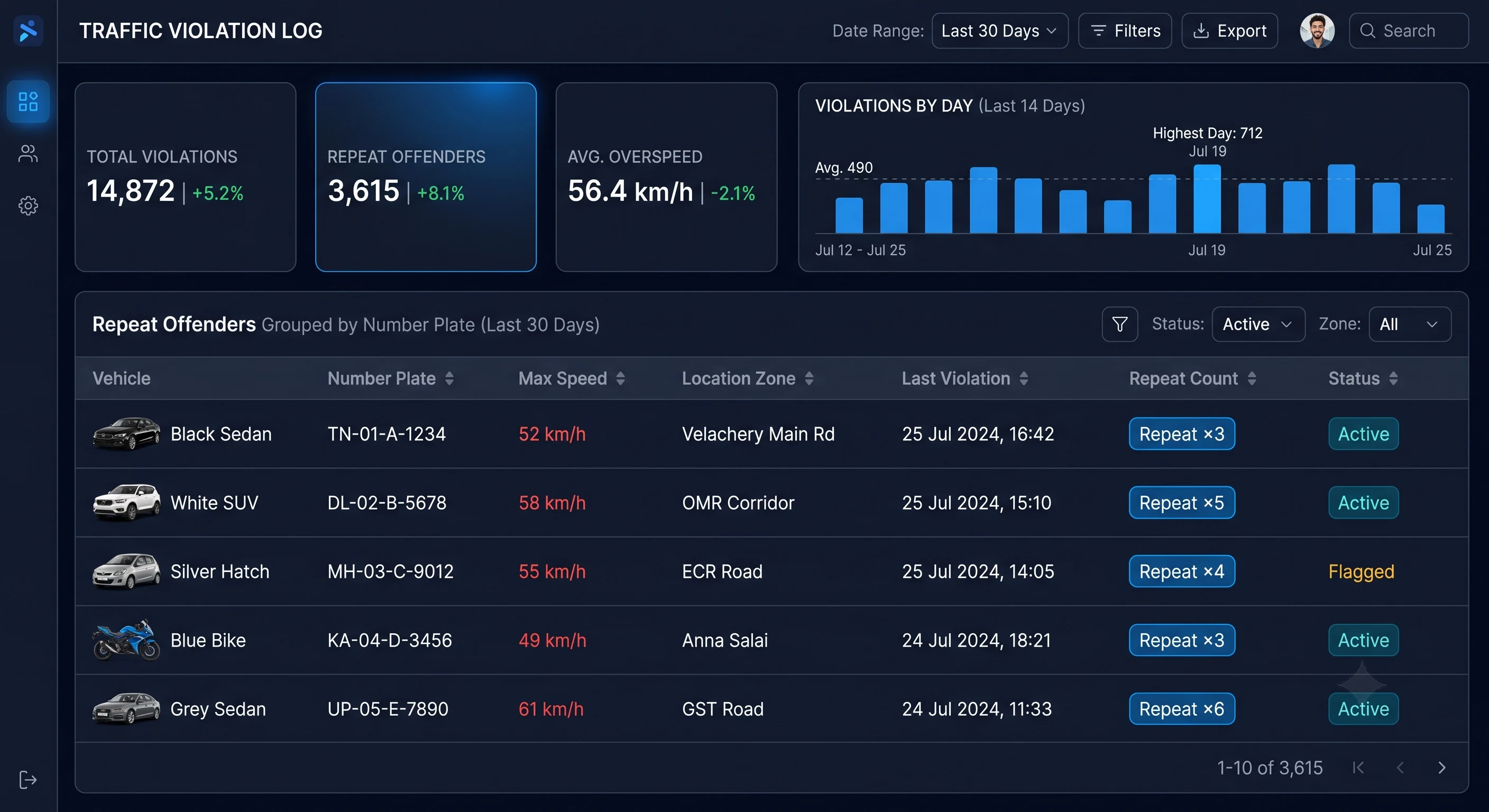
Every overspeed event is logged automatically with speed, time, zone, image, and plate. From that log, TentoVision can be configured to generate repeat-offender reports — so facility and security teams can move from anecdote to evidence: issue graduated warnings, brief a transport contractor, or restrict gate access for habitual violators.
From an ordinary camera feed to a logged, plate-stamped overspeed event — here is the end-to-end flow of camera-based speed detection.
A reference distance is mapped on each road in the camera's view — a one-time setup that tells the AI real-world scale for that scene.
The AI detects each vehicle and follows it frame by frame as it moves across the calibrated zone, day or night on IR-capable cameras.
Speed is derived from distance ÷ time across the zone. The result is checked against the limit set for that road and time window.
If over threshold, security is alerted in real time and the event is logged with speed, zone, timestamp, image, and the captured number plate.
Both measure speed — but they suit different jobs. Radar is the legal standard for public-road challans; camera-AI is built for monitoring and deterrence on the roads you own. Here's an honest comparison.
| Factor | Camera-based AI (TentoVision) | Radar / LIDAR speed camera |
|---|---|---|
| Uses existing cameras | Yes — runs on your current CCTV | No — dedicated radar hardware required |
| Visual + plate evidence | Vehicle image + number plate on every event | Often needs a paired ANPR camera |
| Coverage | A stretch/zone of road in the camera view | Typically a single fixed point |
| Install & civil works | Minimal — connect via RTSP, live in days | Poles, mounts, wiring, and setup |
| Cost profile | Software on existing cameras — lower entry | Hardware CapEx per point |
| Legal-grade certification | Not a certified challan device | Certified radar is the legal standard |
| Best fit | Private / campus / township monitoring & deterrence | Public-road statutory enforcement |
Anywhere vehicles and people share private or semi-private roads and a site operator carries duty-of-care. The same overspeed detection system adapts to each setting's speed limits and zones.
Monitor internal roads near gates, parking, canteens, and pedestrian crossings. Alert security when staff cars or cabs exceed the campus limit, and log repeat offenders for HR or admin follow-up.
Keep speeds down on estate roads where children and residents walk. Give the management committee a record to escalate — from a friendly warning to restricting a repeat offender's vehicle access.
Enforce community speed policy without stationing a guard on every road. Plate-paired logs let the RWA identify residents, guests, or vendors who habitually speed and act on it fairly.
Manage mixed traffic of trucks, cabs, and two-wheelers on park roads and near loading zones. Improve traffic safety across tenants from one central multi-site monitoring setup.
Any private road — resorts, plants, logistics yards, large institutions — where you set the speed rules and need visibility and deterrence rather than a police challan.
Protect the most vulnerable users near school gates, drop-off zones, and hospital entrances with tighter limits and time-based rules during peak footfall hours.
For city and municipal use, camera-based detection supports traffic-safety monitoring and analytics as part of a broader smart city video analytics deployment. Statutory challans remain subject to certified-radar requirements.
Tentosoft's overspeed detection connects to any IP camera using RTSP or ONVIF protocol — and integrates with your existing VMS in minutes. No rip-and-replace. No radar hardware. No proprietary cameras. Go live within days.
Overspeed detection fits any operator responsible for internal road safety on property they control — with rules tuned to each setting.
Estate and township roads shared by residents, children, and vehicles.
Tech parks and office campuses with heavy cab and staff-car movement.
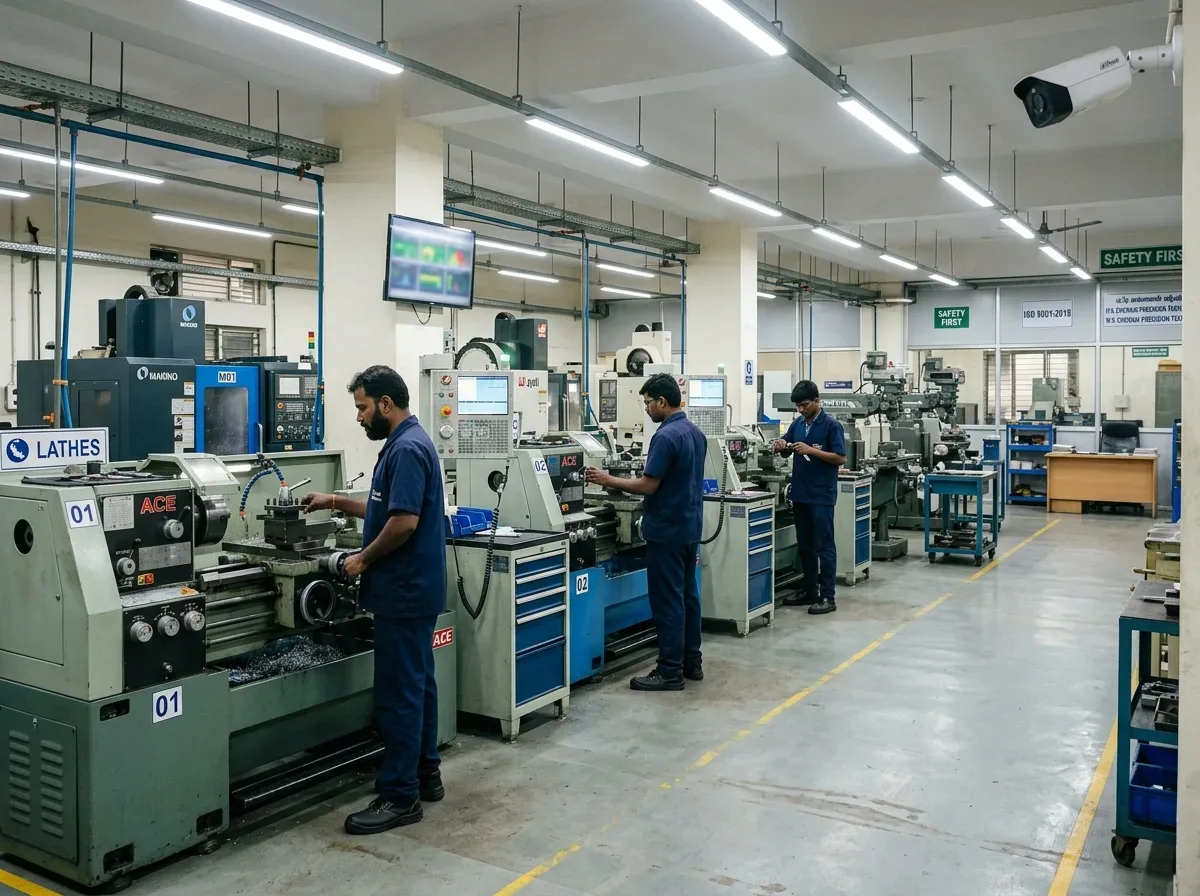
Multi-tenant manufacturing parks with trucks, two-wheelers, and pedestrian traffic.
Campuses where speeds near gates and entrances must stay low.
Traffic-safety monitoring within a wider smart city analytics rollout.
A speed layer that fits into a complete video-analytics platform — not a single-purpose box.
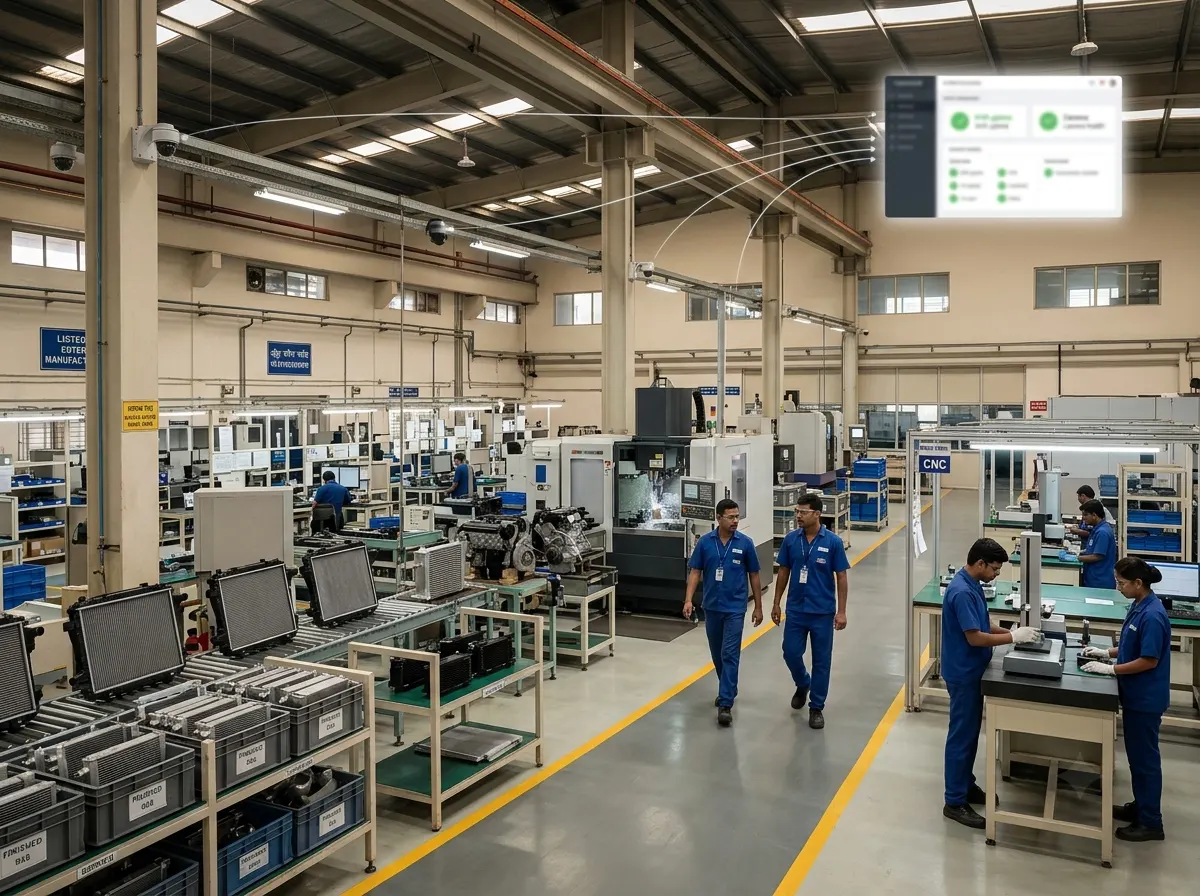
No radar, no new hardware. Connect via RTSP and go live in days on the CCTV you already own.
Every overspeed event is paired with a plate capture, so a violation ties to a specific vehicle.
Set different limits per road and per time window — residential blocks, gates, shift-change hours.
Part of Tentosoft's AI Video Analytics on our video management software — deploy speed alongside people counting, crowd analysis, and fire & smoke detection on one fleet. See pricing.
India-region Microsoft Azure hosting, India-based implementation and support, DPDPA-2023-aware deployments.
Bundled CCTV health monitoring flags offline or degraded cameras so your speed coverage never goes dark unnoticed.
The questions facility, township, and campus managers ask most when evaluating camera-based speed detection — answered directly and honestly.
In 15 minutes, our India-based team shows how Tentosoft connects to your existing cameras, detects overspeeding on a sample road feed, captures the plate, and raises a live alert — no radar, no slide deck.
We run detection on a real road feed so you see the speed calculation and plate capture happen.
We'll assess your camera views and advise where speed detection fits best across your roads.
We'll be honest about monitoring-and-deterrence vs legal challan enforcement for your site.
India-region Microsoft Azure hosting. Footage and data never shared with third parties. DPDPA-2023-aware.
Fill the form — our team responds within 2 business hours.